
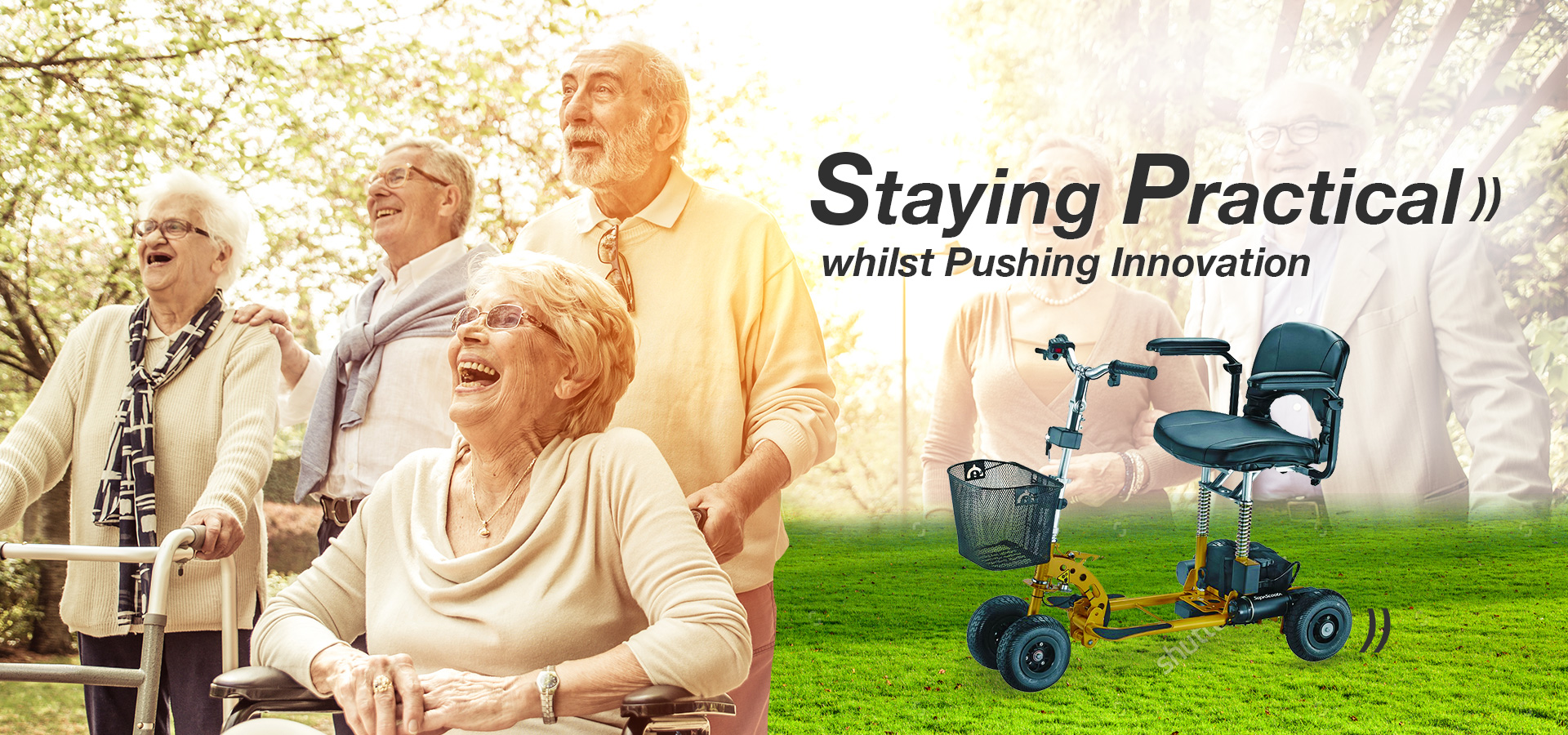

Engineered for Japan's high-density urban geography, strict JIS T 9201 safety parameters, and ultra-lightweight portability requirements.
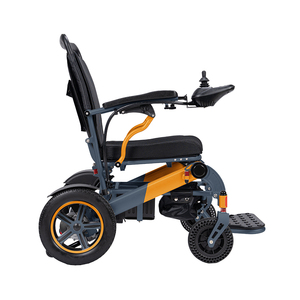
Features remote control automatic folding, lightweight aluminum chassis, and efficient brush motor drive system. Ideal for Japanese vehicle trunk loading.
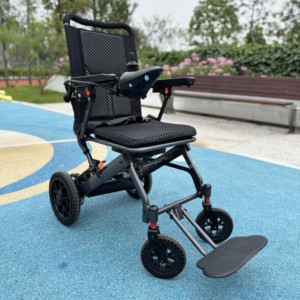
Designed for elderly and handicap outdoor daily mobility. Equipped with quick-swap dual lithium batteries for extended urban range across Tokyo metros.
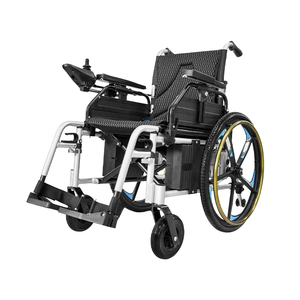
Electric wheelhub drive with 24-inch pneumatic rear wheels. Superior obstacle clearance for outdoor parks, uneven gravel, and suburban slopes.
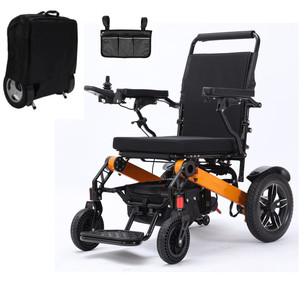
Ultra-compact folding footprint designed specifically for Shinkansen train storage, airline overheads, and compact apartment entrance hall (Genkan) storage.
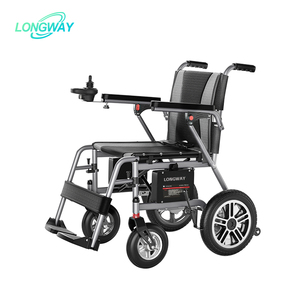
Ergonomic seating architecture with high-density flame-retardant foam, responsive smart joystick controls, and certified lithium battery safety modules.
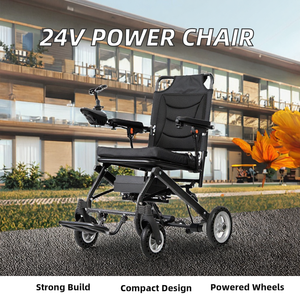
Dual high-torque motor configuration engineered to tackle steep Japanese suburban inclines (up to 12 degrees) with electromagnetic anti-rollback protection.
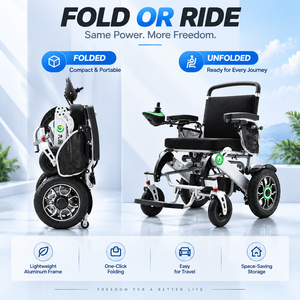
Manufactured with 6061-T6 aviation-grade aluminum alloy. Non-marking solid tires preserve traditional wooden floors and indoor hospital flooring.
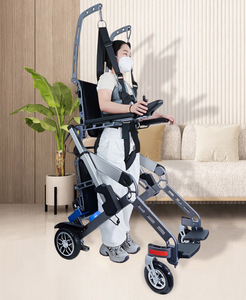
State-of-the-art rehabilitation powerchair with powered standing transition and gait training assistance. Highly sought after by Japanese care facilities (Rouken).
Japan represents one of the world's most sophisticated and demanding markets for personal micro-mobility devices. With over 29.1% of its population aged 65 or older—a demographic ratio expected to cross 35% by 2040—the Japanese medical supply and homecare equipment sectors are undergoing a profound paradigm shift. Traditional manual wheelchairs are increasingly being replaced by compact, intelligent electric wheelchairs that offer independence to elderly users while reducing physical strain on caregivers.
For global importers, B2B medical supply distributors, and welfare equipment rental companies in Japan, procuring high-quality electric wheelchairs requires a localized understanding of domestic regulatory frameworks, physical infrastructure constraints, and user preferences. The Japanese market demands products that adhere strictly to JIS T 9201 (Japanese Industrial Standard for Power Wheelchairs), satisfy the stringent requirements of the Long-Term Care Insurance System (Kaigo Hoken) rental catalog, and fit seamlessly into high-density urban living spaces.
As a premier OEM/ODM manufacturer headquartered in Taiwan, Eurogreen International Inc. (SupaMobility) bridges the gap between high-precision Taiwanese engineering and Japan's rigorous quality standards. By integrating aviation-grade aluminum metallurgy, intelligent Electronic Stability Control (ESC), and ultra-reliable brushless powertrain technology, our mobility range provides Japanese distributors with a decisive competitive advantage in terms of product durability, user ergonomics, and total cost of ownership.
Personal mobility aids engineered for Western markets often fail in Japan due to dimensional oversizing and turning radius limitations. Japan’s unique architectural and urban transit environments require specific engineering adaptations:
Japanese train stations (JR East/West, Tokyo Metro) require wheelchairs to easily pass through narrow ticket gates (Kaisatsukuchi, standard width 550mm–600mm) and turn inside tight elevator cars. Our compact models feature an overall width of under 580mm and a zero-turn radius capability (<800mm turning diameter), guaranteeing smooth boarding onto Shinkansen bullet trains and local urban subways without impeding pedestrian flow.
Japanese homes feature raised entrance steps (Genkan) and narrow interior corridors (Moka). Electric wheelchairs must be ultra-lightweight (under 22kg frame weight excluding batteries) for family members or caregivers to lift across steps. Furthermore, non-marking PU solid tires prevent damage to delicate Japanese hardwood floors and Tatami mats during indoor navigation.
Suburban residential zones in prefectures such as Nagasaki, Yokohama, and Hyogo feature steep inclines. Eurogreen power wheelchairs utilize high-torque dual motors paired with intelligent electromagnetic braking systems (EMB). When the joystick is released on a 10-degree gradient, the brake engages instantaneously, eliminating hazardous rollback even during unexpected battery dropouts.
To assist Japanese procurement managers and technical directors in selecting optimal product lines for regional distribution, the following comparison matrix details key structural and electrical benchmarks engineered into Eurogreen’s product architecture:
| Performance Parameter | Lightweight Travel Series | Dual-Battery Urban Series | Heavy-Duty Outdoor Series | Robotic Gait Rehabilitation Series |
|---|---|---|---|---|
| Chassis Metallurgy | 6061-T6 Aviation Aluminum Alloy | High-Tensile Aluminum Alloy | Reinforced Structural Steel / Alloy | Precision Robot-Welded Steel/Alloy |
| Motor Powertrain | 250W Brushless DC / Brush | 250W x 2 Dual Brushless Motors | 350W x 2 High-Torque Motors | Linear Actuator + Servo Brushless |
| Battery Chemistry | UN38.3 Certified 24V 10Ah Lithium | Dual 24V 6Ah/12Ah Swap Lithium | 24V 20Ah Lithium / AGM Compatible | 24V 15Ah High-Capacity Lithium |
| Max Incline Capacity | 6 to 8 Degrees | 9 to 12 Degrees | 12 to 15 Degrees | 6 to 8 Degrees |
| Braking Architecture | Electromagnetic Regenerative | Intelligent EMB Anti-Rollback | Dual EMB + Manual Override | Multi-Axis Automatic EMB Locking |
| Turning Radius (mm) | 750 mm (Ultra-Compact) | 820 mm | 950 mm | 880 mm |
| Compliance Verification | JIS T 9201 / CE MDR / FDA | JIS T 9201 / CE MDR / FDA | CE MDR / FDA 510(k) | CE Medical Class II / ISO 13485 |
Navigating the Japanese personal mobility supply chain requires a forward-looking perspective on emerging regulatory changes and technological trends:
Japanese customs and safety authorities strictly enforce battery compliance. All Eurogreen lithium battery modules feature built-in smart Battery Management Systems (BMS) with overcharge, thermal runaway, and short-circuit protections. UN38.3 and MSDS documentation are standard with every export shipment.
Due to high utilization rates under Kaigo Hoken leasing arrangements, Japanese rental fleets rotate stock every 3 to 5 years. Manufacturers offering long-term spare parts availability, standardized wiring harnesses, and rapid OEM servicing protocols win sustained B2B contracts.
Anti-tipping technology is undergoing rapid advancement. Eurogreen integrates electronic gyroscope sensors into its premium controllers, automatically adjusting power output during sharp turns on slopes to prevent side-overturn accidents—a crucial safety parameter for elderly Japanese operators.
With Japan facing a deficit of professional caregiving personnel, electric wheelchairs equipped with wireless remote overrides allow nurses and family members to assist maneuverability without manual pushing, enhancing caregiver safety and operational productivity.
As the parent manufacturing powerhouse behind SupaMobility, SupaScoota, and SupaChair, Eurogreen International Inc. (勝富實業股份有限公司) brings over 25 years of specialized mechanical engineering and OEM/ODM service to global medical supply partners.

Every electric wheelchair model manufactured in our facility undergoes rigorous multi-stage quality control routines:
Our manufacturing facility operates under audited ISO 13485 Medical Device Quality Management Standards. Product designs hold global approvals including FDA 510(k), CE MDR Class I, and comprehensive test compliance reports tailored for Japanese PMDA importer verification.

Addressing crucial commercial, technical, and regulatory questions commonly raised by Japanese medical equipment importers, welfare equipment distributors, and OEM buyers:
Yes. Our engineering platforms are designed around key JIS T 9201 metrics, including dimensional limits, static stability on slopes, braking effectiveness, structural fatigue strength, and electromagnetic compatibility. We provide full technical documentation and sample units to support Japanese distributors undergoing domestic JIS verification or PMDA notification.
We offer flexible B2B ordering structures. Standard product orders start at low MOQ thresholds (e.g., 20 to 50 units), while custom OEM orders featuring custom frame color choices, localized branding/labels, Japanese user manuals, and customized carton packaging typically begin at 100 units.
All lithium-ion battery packs utilized in Eurogreen power wheelchairs undergo complete UN38.3 vibration, shock, altitude, and thermal testing. Every shipment includes complete Material Safety Data Sheets (MSDS), UN38.3 Summary Test Reports, and drop test certificates ensuring smooth sea freight, air freight clearance, and compliance with Japanese port regulations.
Absolutely. As a direct manufacturer, Eurogreen guarantees long-term supply continuity for spare parts—including joysticks, controllers, motor brushes, tire assemblies, and battery connectors—for a minimum of 7 to 10 years following product release. We support standardized modular replacements to simplify field repair for Japanese service centers.
Yes. Models such as our Auto-Folding and Ultra-Lightweight Travel series fold into compact dimensions (approx. 780mm x 580mm x 380mm) and weigh as little as 19kg without batteries. They fit effortlessly into the boot space of popular Japanese micro-vans and Kei cars (such as the Honda N-Box, Daihatsu Tanto, or Suzuki Spacia).
We provide a 2-year structural frame warranty and a 1-year limited warranty covering electrical controllers, motors, and battery systems. Our engineering team in Taiwan offers direct English and Japanese technical documentation, exploded parts diagrams, and video support to assist your technical service staff.
Partner with Eurogreen International Inc. to import certified, high-margin, and reliable electric wheelchairs tailored for Japanese distribution networks, welfare equipment rental operators, and medical supply retail chains.