


The global medical mobility industry is undergoing a structural paradigm shift. As healthcare providers, institutional distributors, and commercial brand owners seek competitive advantages, the demand for high-reliability wheelchair accessories manufacturers and OEM factories has escalated from basic aftermarket assembly to advanced mechatronic co-development. Search intent analysis across global supply chain decision-makers reveals that procurement heads are no longer seeking simple component re-sellers; they require tier-1 manufacturing partners capable of delivering custom tooling, regulatory-compliant metallurgical integrity, and integrated electronic safety platforms.
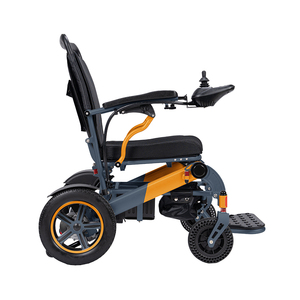
Modern power mobility platforms rely heavily on modular accessory ecosystems. These include high-torque brushless wheel hub motors, smart battery management systems (BMS), dynamic electronic stability control (ESC) units, and posture-correcting seating accessories. A manufacturer's ability to maintain high precision tolerances across both mechanical frames and electronic control modules dictates its long-term viability in the global medical equipment market.
To evaluate international wheelchair accessory factories and original equipment manufacturers (OEMs), engineering audits must look beyond total plant footprint. True industrial competency is determined by six primary operational vectors:
Below is a comparative breakdown illustrating how top-tier medical mobility OEMs structure their manufacturing and quality control capabilities versus standard commercial suppliers:
| Assessment Metric | Tier-1 OEM Manufacturing Standards | Standard Commercial Factories |
|---|---|---|
| Primary Metallurgy | Aviation-Grade 6061-T6 / Carbon Fiber Composites | Low-grade Commercial Steel / Untreated Aluminum |
| Quality Management Systems | ISO 13485, FDA Registered, EU MDR Technical Files | ISO 9001 (Non-medical general industrial) |
| Motor Technology | Brushless DC Hub Motors with Sine-Wave Vectoring | High-friction Brushed Motors with Basic Relays |
| BMS & Battery Safety | Smart Cell Balancing, Thermal Telemetry, UN 38.3 | Unregulated Lithium/Lead-Acid Cells without Telemetry |
| Chassis Testing Standard | 200,000+ Cycles Roller Bench & Dynamic Slope Impact | Static Weight Capacity Load Checks Only |
| ODM Customization | Full Custom Mold Engineering & Firmware Calibration | Basic Logo Printing on Off-the-Shelf Parts |
A power wheelchair system is only as strong as its weakest accessory. Tier-1 manufacturers like Eurogreen International Inc. (SupaMobility) approach component design through a unified systems-engineering framework. Sourcing managers must understand the specific technical requirements of four major component groups:
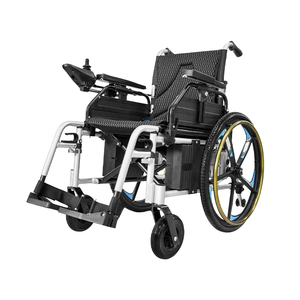
The shift from traditional right-angle brushed gearboxes to integrated brushless wheel hub motors represents one of the most critical advances in power wheelchair design. Direct-drive wheel hubs remove mechanical friction points, eliminating gear noise, reducing power loss by up to 22%, and dramatically extending battery range. In heavy-duty 24-inch power assist configurations, integrated hub motors allow manual wheelchairs to convert seamlessly into high-torque motorized systems without increasing total vehicle footprint.
Modern wheelchair accessories extend far beyond simple physical attachments. User interface mounts must support advanced telemetry systems. Controllers engineered with programmable acceleration curves, anti-recoil safety logic, and electronic stability control (ESC) prevent tip-overs on steep gradients or uneven terrain. OEM factories must offer customizable mounting brackets that withstand continuous dynamic vibration without loosening over time.
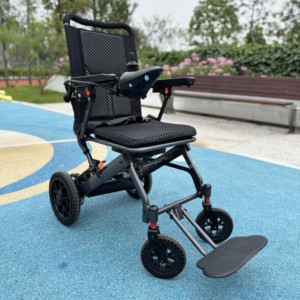
Energy storage components represent both a performance driver and a primary regulatory compliance focus. Advanced lithium-iron-phosphate (LiFePO4) and nickel-manganese-cobalt (NMC) battery packs integrated into lightweight folding chairs require smart Battery Management Systems (BMS). These systems continuously monitor cell voltages, balance thermal profiles during fast-charging cycles, and prevent over-discharge. For international travel models, accessory battery packs must strictly adhere to IATA under-300Wh capacity limits with certified flame-retardant casing materials.
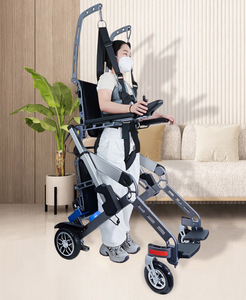
The integration of motorized standing-sitting mechanisms into power wheelchairs transforms a standard mobility device into an active therapeutic gait trainer. These complex accessories utilize high-load linear actuators capable of smoothly elevating the user to a full vertical posture. Key structural accessories include multi-point safety harnesses, chest supports, adjustable knee-blockers, and anti-tipping stabilising outriggers that automatically deploy prior to standing elevation.
With decades of specialized precision manufacturing in Taiwan, Eurogreen International Inc. (operating globally under the flagship product lines SupaMobility, SupaScoota, and SupaChair) stands as a global benchmark for OEM/ODM power mobility solutions.
Eurogreen’s core manufacturing philosophy centers on Practical innovation, quality first, and continuous improvement. Every product platform engineered in our facilities undergoes a comprehensive suite of destructive and non-destructive quality control benchmarks:
Eurogreen’s engineering team supports international B2B clients through complete turnkey OEM/ODM services: from initial CAD design, FEA structural stress modeling, rapid prototype casting, through to formal FDA, CE, and ISO 13485 regulatory filing support. Our proprietary lightweight folding mechanisms eliminate unnecessary frame weight without compromising structural rigidity, providing global brands with high-margin, ultra-reliable product lines.
Procurement directors planning 5-year product roadmaps must align their sourcing strategies with four major technological trends transforming the mobility accessories market:
While 6061 aluminum remains the industry workhorse, next-generation travel wheelchairs and accessories are adopting carbon-fiber composite frames and die-cast magnesium alloy components. These materials offer up to 40% weight reduction while increasing tensile strength, enabling full power wheelchairs to weigh under 15 kg without batteries.
Accessories are becoming smarter. Ultrasonic sensor bars, micro-LiDAR modules, and AI-driven camera systems are being integrated into accessory bumpers and joystick housings. These components dynamically slow down or steer wheelchairs away from steep drops, stairs, or obstacles, opening new opportunities in commercial healthcare and senior living facilities.
Distributors increasingly demand plug-and-play modularity. Future power wheelchairs feature standardized electronic bus connections (CAN-bus integration) that allow quick attachment of power-elevating seats, specialized headrests, oxygen tank holders, or posture-assist actuators without requiring custom wiring harnesses or factory rebuilds.
In response to global trade fluctuations and tightened EU MDR compliance rules, major medical brand owners are prioritizing verified, high-precision manufacturing hubs in Taiwan and specialized medical export zones. Working with factories that possess complete internal testing infrastructure drastically reduces regulatory approval times and supply chain disruption risks.
Expand your product portfolio with certified, high-reliability power wheelchairs, travel mobility scooters, and modular accessories engineered for long-term commercial success.
Inquire Now