


Explore our certified portfolio of ultralightweight, folding, and heavy-duty electric wheelchairs manufactured for international healthcare brands and distributor channels.
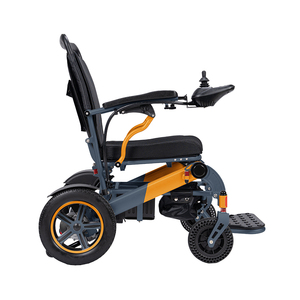
Engineered with high-grade aluminum frame, wireless remote automatic folding mechanism, and high-efficiency brush drive system for effortless transit.
Inquire Now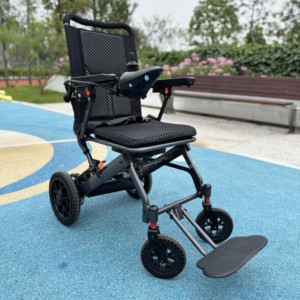
Designed for active elderly and handicap outdoor mobility featuring hot-swappable dual lithium battery bays and reinforced quick-fold chassis.
Inquire Now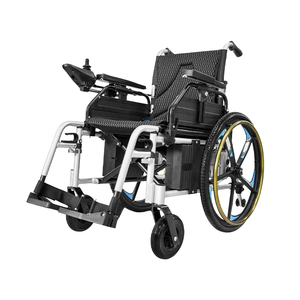
Features high-torque brushless hub motors, 24-inch rear pneumatic wheels, and dynamic terrain stabilization for rugged outdoor performance.
Inquire Now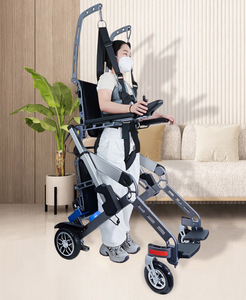
Next-gen rehabilitation platform combining motorized sit-to-stand kinematics, intelligent gait training algorithms, and lithium power modules.
Inquire Now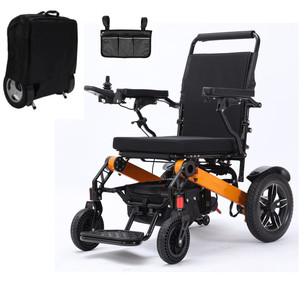
Factory-direct OEM model optimized for global export with airline-approved UN38.3 lithium batteries and ultra-compact trunk stowage geometry.
Inquire Now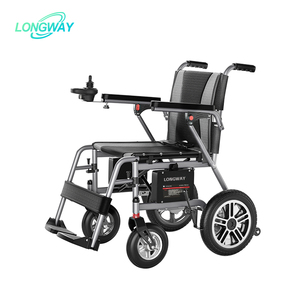
Premium ergonomic seating configuration integrated with automated push-button folding, smart joystick controllers, and safety sensing arrays.
Inquire Now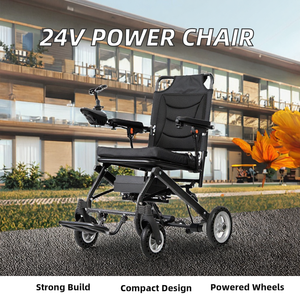
Equipped with heavy-duty dual motors, enhanced incline climbing capability, dynamic suspension, and long-range energy density cells.
Inquire Now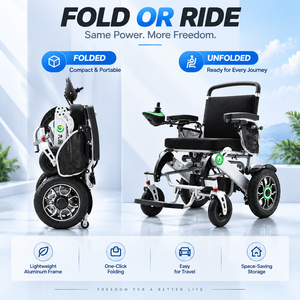
Versatile indoor/outdoor chassis featuring narrow turning radius, lightweight aircraft alloy construction, and breathable anti-microbial seating.
Inquire NowThe global personal mobility device (PMD) sector is experiencing a paradigm shift driven by demographic aging, urban density, and accelerated demand for lightweight, portable personal transportation solutions. According to recent market intelligence reports, the global powered wheelchair market is projected to expand at a compound annual growth rate (CAGR) exceeding 8.4% through 2030, with compact, foldable, and customized electric wheelchairs accounting for over 52% of total procurement volume from institutional buyers, distributor networks, and retail medical suppliers.
Traditional, heavy power chairs weighing over 80 kg are increasingly being phased out in favor of modular, high-strength aluminum and magnesium alloy compact powerchairs weighing between 14 kg and 26 kg. This transition presents significant OEM/ODM opportunities for healthcare brands and medical device importers. However, navigating the global sourcing landscape requires partnering with factories that possess comprehensive manufacturing infrastructure, robust quality management systems (QMS), and established regulatory compliance profiles across North American, European, and Asia-Pacific jurisdictions.
Strategic Procurement Insight: Modern institutional buyers prioritize OEM suppliers capable of delivering modular chassis designs, active Electronic Stability Control (ESC), UN38.3 lithium battery certifications, and automated folding kinematics to capture high-margin retail market segments.
Evaluating an OEM compact wheelchair factory requires a granular technical assessment of materials science, powertrain integration, safety electronics, and structural validation. High-performance OEM compact wheelchairs depend on four core technical pillars:
Leading factories utilize 6061-T6 and 7075-T6 aircraft-grade aluminum alloys or magnesium-aluminum matrix alloys to achieve optimum strength-to-weight ratios. The integration of robotic TIG welding and hydroformed tube geometry allows manufacturing teams to reduce frame mass without compromising structural integrity. Structural kinematics must pass finite element analysis (FEA) to endure dynamic payload capacities ranging from 120 kg to 180 kg while subjected to multi-axis fatigue testing exceeding 200,000 stress cycles.
Next-generation compact powerchairs have transitioned from heavy brushed motors with planetary gearboxes to high-torque, gearless Brushless DC hub motors or compact worm-gear brushless powerpacks. Brushless hub motor architectures offer up to 88% mechanical efficiency, silent operation, zero carbon brush maintenance, and integrated electromagnetic braking (EMB) mechanisms that engage automatically upon joystick release to prevent roll-back on inclines up to 12 degrees.
| Technical Parameter | Legacy Brushed Motor Systems | Advanced OEM Brushless (BLDC) Systems |
|---|---|---|
| System Weight | 12.5 kg – 18.0 kg | 5.2 kg – 8.5 kg |
| Motor Efficiency | 65% – 72% | 84% – 90% |
| Braking System | Manual / Friction Brake | Automatic Electromagnetic (EMB) + Regenerative |
| Maintenance Interval | 1,000 Hours (Brush replacement) | Maintenance-Free (10,000+ Hours) |
| Noise Level | > 65 dB | < 48 dB (Whisper Silent) |
Lithium Iron Phosphate (LiFePO4) and Nickel Manganese Cobalt (NMC) chemistries dominate modern compact powerchair design. For OEM distributors catering to travel-oriented consumers, battery packs must strictly adhere to IATA UN38.3 transport standards. Modular dual-pack configurations (e.g., 2 x 24V 6Ah packs totaling under 300Wh) enable users to remove one pack for airline carry-on approval while preserving long-range operational capability (20 km to 30 km total range).
Safety is the foundational metric under Google’s E-E-A-T framework and global medical device regulations. Modern OEM manufacturing incorporates micro-gyroscope ESC systems that monitor roll rate and turning acceleration in real-time. If a user executes a high-speed turn or navigates uneven slope gradient, the intelligent controller automatically throttles power to the outer wheel, eliminating tip-over hazards. Optional IoT telematics modules provide GPS tracking, remote diagnostics, and cellular battery health monitoring for commercial rental fleets and institutional care providers.
Founded with a dedication to engineering excellence, Eurogreen International Inc. (SupaMobility / SupaScoota / SupaChair) stands as a premier OEM/ODM manufacturer headquartered in Taiwan. Operating certified manufacturing facilities, Eurogreen specializes in ultra-lightweight, foldable mobility scooters, hybrid motorized wheelchairs, and compact power chairs.
Our engineering division combines over 25 years of mechanical and electrical R&D experience, providing custom chassis prototyping, mold development, private-label branding, and international regulatory support (FDA 510k, CE MDR, ISO 13485) for global healthcare distributors.

B2B buyers and medical supply sourcing executives must align their product roadmaps with key emerging technological and regulatory shifts over the next decade:
Compact wheelchairs are increasingly incorporating autonomous features developed in the robotics and micro-mobility sectors. Sensor arrays utilizing Ultrasonic obstacle detection, LiDAR proximity mapping, and line-following gait assistance are transitioning from high-end rehabilitation centers to commercial compact wheelchairs. OEM factories capable of integrating modular sensor buses will provide distributors with significant product differentiation.
European and North American regulatory mandates increasingly require Life Cycle Assessments (LCA) and recycled material traceability. Leading OEM manufacturers are adopting eco-certified powder coatings, bio-based polyurethane upholstery, and fully recyclable aluminum alloys, alongside closed-loop lithium battery recycling compliance programs.
To reduce time-to-market from 18 months to under 120 days, global brand owners are shifting away from bespoke, single-model tooling in favor of Modular OEM Chassis Platforms. By leveraging shared structural cross-members, electronic controllers, and quick-release battery housing, distributors can launch diverse SKU portfolios (such as auto-folding travel chairs, heavy-duty outdoor models, and standing rehabilitation units) while sharing up to 70% of baseline component inventory.
Global compliance is mandatory for medical device distribution. Eurogreen International maintains a comprehensive Quality Management System (QMS) certified under ISO 13485 for medical device manufacturing.
Every compact wheelchair batch undergoes rigorous double-drum roller bench fatigue testing, dynamic slope stability analysis, salt spray corrosion testing for metal frames, and electromagnetic compatibility (EMC) testing for drive controllers to ensure seamless registration with FDA, CE MDR, and TGA regulatory authorities.
Technical guidance for medical equipment importers, distributors, and private-label buyers regarding compact electric wheelchair OEM production.
Our standard Minimum Order Quantity (MOQ) for baseline private-label production (custom branding, colorways, user manual branding, and outer carton printing) starts at 50 units per SKU. For full ODM engineering projects requiring custom frame tooling, proprietary plastic shroud molds, or customized electronic controller firmware, the initial MOQ typically ranges from 200 to 500 units depending on component commonality.
All lithium-ion battery modules installed in our compact power wheelchairs undergo rigorous UN38.3 testing, including altitude simulation, thermal testing, vibration, shock, external short circuit, and forced discharge evaluations. We offer modular battery configurations under 300Wh (or dual split 160Wh packs) specifically engineered to comply with IATA provisions for passenger aircraft carry-on baggage, facilitating hassle-free travel for end users.
Eurogreen International enforces a strict 4-stage Quality Assurance framework: (1) Incoming Quality Control (IQC) for raw aluminum tubes, motor assemblies, and battery cells; (2) In-Process Quality Control (IPQC) monitoring frame welding alignment and wiring harness insulation; (3) Final Quality Control (FQC) involving a 100% functional test of joystick response, electromagnetic braking, auto-folding mechanisms, and 5 km drive simulation; and (4) Outgoing Quality Control (OQC) inspecting export packaging drops and drop-test endurance.
Yes. As an ISO 13485 certified medical device manufacturer, Eurogreen provides comprehensive technical documentation packages (STED format), including biocompatibility test reports, EN12184 performance testing, electromagnetic compatibility (EMC EN60601-1-2) data, and risk management documentation (ISO 14971). We actively assist global distributors in transferring 510(k) clearances and registering products under EU MDR Class I / Class IIa device frameworks.
Evaluation samples of standard OEM models are dispatched within 7 to 14 business days. Standard mass production lead times for container-load orders (20ft/40ft HQ) average 35 to 45 calendar days following engineering sign-off and deposit confirmation. For complex ODM projects requiring customized tooling, the engineering sample phase takes approximately 60 to 90 days.
We offer comprehensive structural and electrical warranty coverage for commercial importers: 3 years on structural frame integrity, 12 months on brushless motors and electronic joystick controllers, and 12 months on lithium battery modules. Furthermore, we supply 2% to 3% complimentary wear-and-tear spare parts (such as tires, armrest pads, and cable harnesses) with every full-container shipment to support your local aftermarket service network.
Expand your product portfolio with industry-leading, certified, and engineered compact powerchairs. Our R&D team is ready to accelerate your brand's market growth.