


Engineered for global medical supply distributors, importers, and brand partners seeking high-reliability mobility technology certified for FDA, CE MDR, and ISO 13485 compliance.
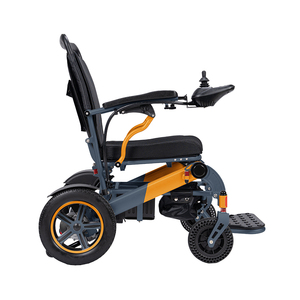
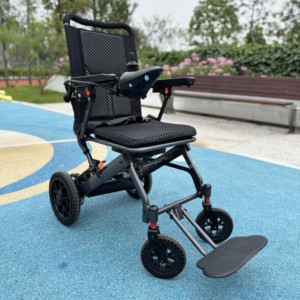
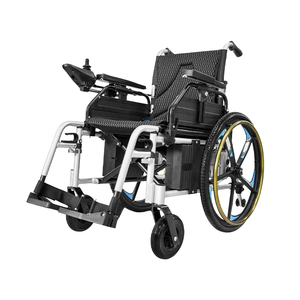
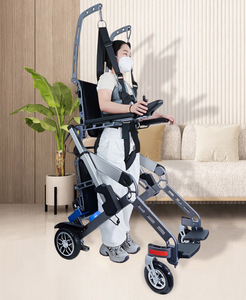
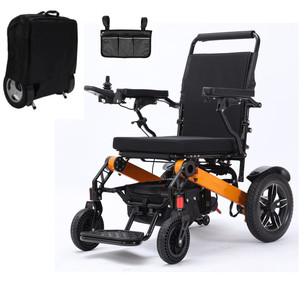
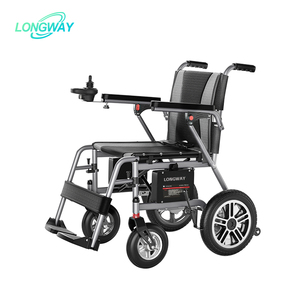
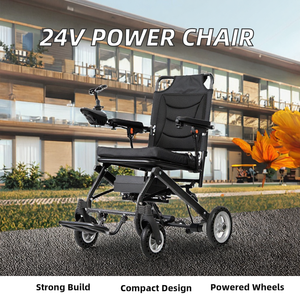
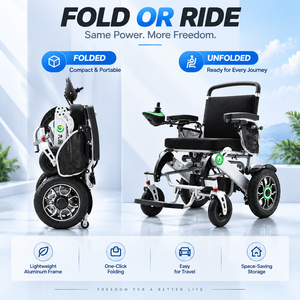
The global intelligent mobility market is undergoing a seismic transformation. Driven by rapid demographic shifts—specifically the expansion of the global aging population ("Silver Economy") and an increasing incidence of neurological and mobility impairments—the demand for smart personal mobility devices (PMDs) is accelerating. Institutional buyers, medical supply wholesalers, and government procurement agencies are migrating away from legacy, heavy steel motorized wheelchairs toward lightweight, modular, connected smart wheelchairs.
B2B importers are increasingly demanding smart power wheelchairs equipped with integrated IoT telematics modules. Modern fleets require CAN-bus communication protocols that transmit real-time telemetry data including battery state-of-health (SoH), motor thermal load, GPS localization, and fault codes directly to distributor service portals. This reduces field service overhead by over 40% and allows predictive maintenance before hardware failures occur.
Regulatory scrutiny across Europe (EU Medical Device Regulation 2017/745) and North America (FDA 21 CFR Part 890) has heightened barrier-to-entry standards. Future procurement strategies prioritize suppliers who maintain fully validated Quality Management Systems (QMS), complete EN 12184 dynamic stability testing reports, and ISO 7176 compliance documentation. Non-compliant generic exporters are rapidly being replaced by certified OEM manufacturers.
Energy density and transport compliance are major purchasing criteria. The market is standardizing on safe, high-cycle LiFePO4 (Lithium Iron Phosphate) and ternary NCM lithium-ion packs. Procurement specifications mandate UN38.3 certification, MSDS verification, and dual-capacity options (e.g., 24V 12Ah under 300Wh for IATA commercial flight approval versus 24V 20Ah for long-range outdoor mobility).
Leading global distributors prioritize low TCO over initial unit cost. Modular design architectures—where controllers, brushless wheel hub motors, electromagnetic brakes, and folding linkages can be replaced in under 10 minutes—have become a benchmark requirement. This modularity minimizes inventory carrying costs for spare parts and accelerates field turnaround time.
Innovation in China's smart wheelchair manufacturing sector has transitioned from cost-driven assembly to cutting-edge technological synthesis. By combining advanced robotics, automotive-grade metallurgical engineering, and artificial intelligence, Chinese exporters are defining the future of powered mobility.
Integration of solid-state LiDAR, ultrasonic sonar sensors, and optical time-of-flight (ToF) cameras allows modern smart wheelchairs to perform real-time terrain mapping. Robotic standing-sitting mechanisms (such as gait training assist models) enable active neurological rehabilitation while preventing pressure sores through programmed posture shifts.
Traditional brushed DC motors paired with heavy worm gearboxes are giving way to high-efficiency Brushless DC (BLDC) wheel-hub gearless motors. BLDC motors deliver 92%+ energy efficiency, zero carbon brush maintenance, silent operation (<45dB), and instantaneous electromagnetic dynamic braking on steep inclines up to 15 degrees.
Adopting automotive-grade gyro-sensors and accelerometer fusion algorithms, smart wheelchairs now feature Electronic Stability Control (ESC). ESC automatically throttles inner wheel torque during high-speed cornering, prevents side-slope roll-overs, and guarantees linear downhill tracking on uneven cross-pitches.
| Technical Parameter | Legacy Power Wheelchairs | Next-Gen Smart Powerchairs (Our Standard) | Procurement Value Advantage |
|---|---|---|---|
| Frame Material | Heavy Carbon Steel / Standard Aluminum | Hydroformed 6061-T6 Aircraft Alloy / Carbon Fiber | 35% Weight Reduction; Higher Corrosion Resistance |
| Motor Technology | Brushed DC Motor with Gearbox | Dual High-Torque BLDC Hub / Planetary Motor | Zero Brush Wear; Extended Motor Lifespan (>10 yrs) |
| Braking Architecture | Manual Mechanical Friction Brakes | Intelligent Electromagnetic Dynamic Brake + ESC | Zero Roll-back on Slope; Instant Auto Lock |
| Battery System | Lead-Acid / Heavy AGM Gel Batteries | Smart BMS Lithium-Ion / LiFePO4 (UN38.3 Flight Approved) | 3x Cycle Life (1,500+ cycles); Rapid 3-Hour Charging |
| Control Protocol | Analog Joystick Controller | 360° Digital Hall-Effect CAN-Bus Controller + App Telematics | Sub-millimeter Control Precision; Remote Diagnostics |
Representing the peak of Taiwanese R&D engineering and mainland China's robust supply chain integration, Eurogreen International Inc. (SupaMobility / SupaScoota / SupaChair) stands as a premier trusted OEM/ODM mobility solution partner. Guided by our corporate philosophy: "Practical innovation, quality first, and continuous improvement," we provide global distributors with unparalleled manufacturing capability.
Every single power wheelchair and folding mobility scooter leaving our manufacturing facilities undergoes strict multistage QA testing:
We empower global brand owners, medical distributors, and private-label buyers with comprehensive ODM engineering services:
Essential insights addressing key operational, technical, and regulatory questions for global medical equipment buyers.
For the United States, power wheelchairs are classified as Class II Medical Devices, requiring FDA 510(k) clearance, establishment registration, and device listing under 21 CFR Part 890. For the European Union, compliance with the EU Medical Device Regulation (MDR 2017/745) is mandatory. Products must undergo EN 12184 testing (Electrically powered wheelchairs, scooters, and their chargers) and ISO 7176 series testing (including dynamics, braking efficiency, and electromagnetic compatibility EMC). Our manufacturing lines maintain ISO 13485 QMS certification, ensuring all technical documentation and CE/FDA dossiers are readily available for seamless customs clearance.
International Air Transport Association (IATA) regulations specify that lithium-ion batteries powering mobility aids must not exceed 300Wh capacity for single batteries, or 160Wh each for dual battery systems, to be carried in the aircraft cabin. We supply all travel mobility wheelchairs with UN38.3 certification reports, Material Safety Data Sheets (MSDS), and drop-test certification packages. Additionally, our battery packs feature quick-release latching systems that allow passengers to remove the battery within 5 seconds for cabin carry-on compliance.
For standard catalog models under white-label branding (custom logo application and branded packaging), our baseline MOQ starts at 20 units (a standard 20ft container mixed-lot order is supported). For deep ODM customization involving specialized frame tooling, custom color powder coating, or bespoke controller firmware, the MOQ is typically 100 to 200 units depending on the engineering scope. We also offer sample unit dispatch for evaluation prior to bulk contract execution.
Brush Motors utilize mechanical carbon brushes to transfer electrical current, offering a cost-effective, proven design with high initial torque. However, they generate friction, require periodic brush replacement, and consume slightly more battery power. Brushless BLDC Motors (and direct-drive Hub Motors) utilize electronic commutation, offering up to 30% greater energy efficiency, silent operation (<45dB), lighter weight, and zero routine maintenance over a 10-year operational life. We offer both technologies to suit distributor price positioning and target buyer preferences.
We back our products with a comprehensive B2B warranty structure: 3 Years Structural Warranty on the aluminum alloy/steel frame, 1 Year Limited Warranty on motors, controllers, and electronics, and 1 Year Warranty on lithium battery packs. We guarantee long-term spare parts availability for at least 7 years post-discontinuation of any model and provide 1% to 2% complimentary wearing spare parts (such as joystick rubber boots, armrest pads, and tire castors) with full container shipments.
Electronic Stability Control (ESC) uses integrated 6-axis MEMS gyroscopes to continuously measure angular velocity and vehicle tilt angles 100 times per second. If the system detects differential wheel slip, yaw instability on side slopes, or excessive speed during tight turns, the controller automatically regulates independent motor torque and applies subtle electromagnetic braking to maintain straight-line traction and prevent sideways tipping or downhill runaways.
Standard bulk manufacturing lead time for standard models is 30 to 45 days upon receipt of the deposit and artwork approval. Customized OEM/ODM orders requiring custom plastic injection or specialized aluminum extrusion may require 60 days for initial batch production. Expedited sample evaluation orders can be dispatched within 7 to 14 working days via air freight.
Yes. Our intelligent smart wheelchairs utilize standardized open CAN-bus communication protocols and Bluetooth/2.4GHz wireless control interfaces. This allows seamless integration with caregiver remote control apps, attendant control brackets, head-array switches, chin-controls, or robotic gait rehabilitation tracking software used in institutional nursing facilities.
Expand your product lineup with industry-leading lightweight folding electric wheelchairs, robotic gait trainers, and heavy-duty power chairs certified for global market distribution.