

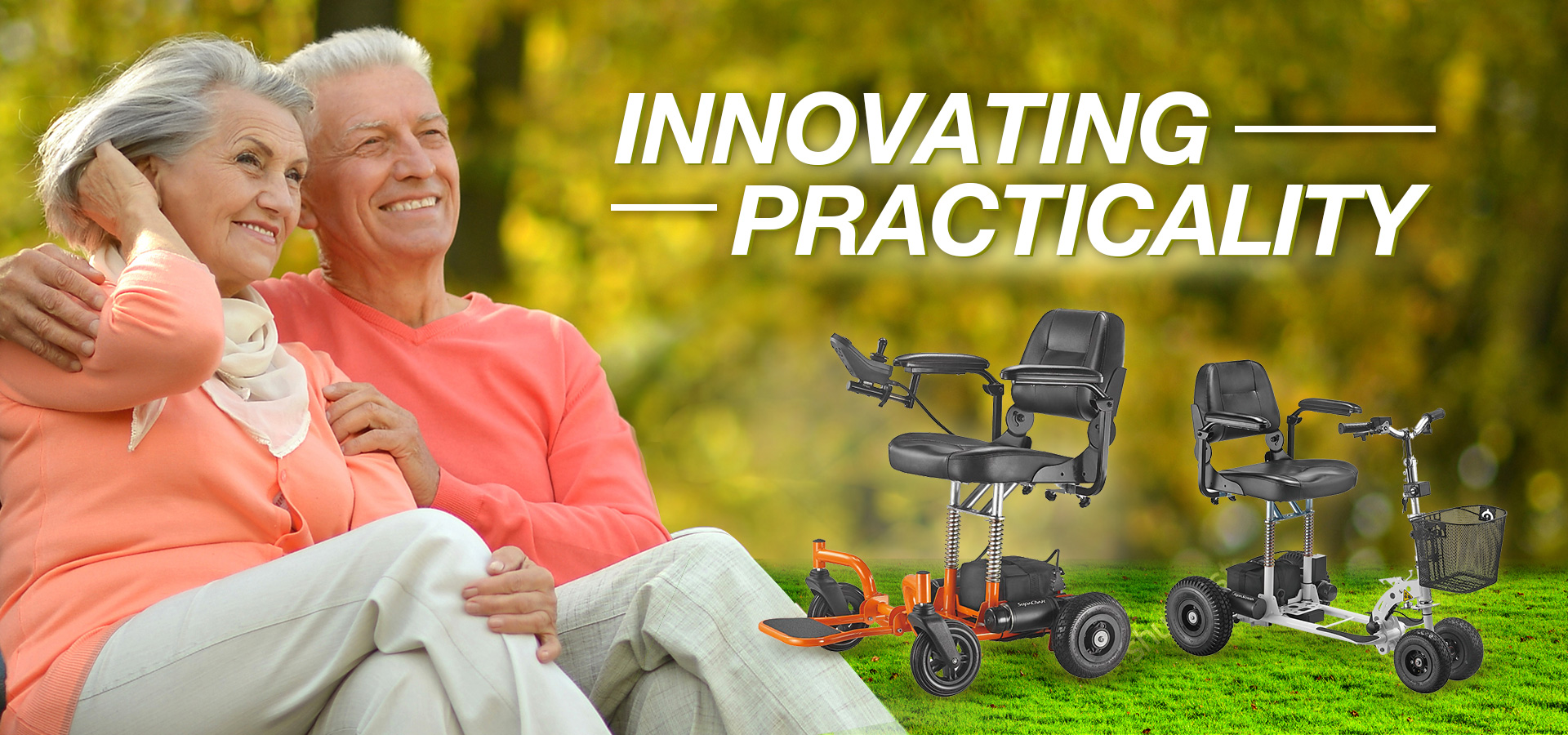
Engineered for global medical distributors, rehab equipment providers, and OEM importers. Compliant with international medical device certifications (FDA, CE, ISO 13485).
Key metrics reflecting why leading medical equipment brands source automated power chairs from top Chinese and Taiwanese manufacturing hubs.
Eurogreen International Inc. (SupaMobility) sets the global standard for custom OEM/ODM motorized wheelchairs and portable mobility scooters.
Founded on the principles of "Practical Innovation, Quality First, and Continuous Improvement", Eurogreen International Inc. has spent decades establishing itself as a premier OEM/ODM manufacturer in the medical mobility industry. Our dedicated mechanical engineering, electrical systems, and robotic software teams empower global importers, wholesalers, and medical device brands to bring cutting-edge mobility solutions to market rapidly.
Multi-disciplinary engineering teams specializing in brushless motor vector control, automatic folding kinematics, self-balancing gyroscopes, and AI voice interfaces.
100% rigorous multi-stage testing protocol: battery endurance simulation, multi-terrain road vibration testing, and continuous roller bench load tests under extreme conditions.
Fully compliant with international medical mandates including US FDA 510(k) registry, European CE Medical Device Regulation (MDR), and ISO 13485 quality systems.
Proprietary Electronic Stability Control (ESC) automatically slows down power chairs during high-speed cornering, eliminating tip-over hazards for elderly users.
Equipped with certified quick-release 24V/12Ah lithium-ion battery modules that conform to IATA regulations for carry-on flight clearance worldwide.
End-to-end bespoke services: customized chassis colorways, brand logo silk-screening, controller firmware tuning, and customized packaging design.
An executive analysis of automated wheelchair technology directions through 2030.
The automated power wheelchair industry is undergoing a paradigm shift driven by demographic aging, micro-mobility engineering, and artificial intelligence integration. Legacy power chairs—notoriously bulky, heavy (weighing over 50kg), and difficult to transport—are rapidly losing market share to lightweight, smart, and multi-functional gait-training automatons.
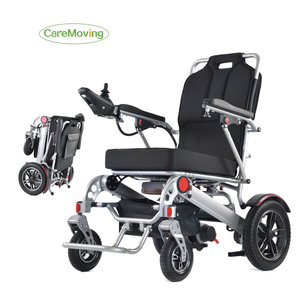
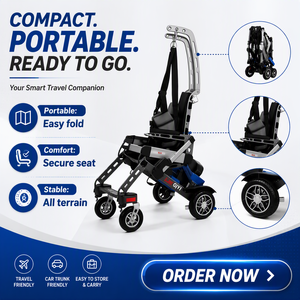
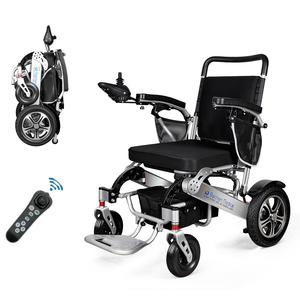
Material science is at the forefront of automated wheelchair innovation. Traditional steel and thick aluminum tubing are being superseded by Magnesium-Aluminum alloys and carbon fiber composites. Magnesium alloy is 33% lighter than aluminum and 75% lighter than steel while boasting superior vibration damping capabilities. Modern automatic folding electric wheelchairs now weigh as little as 12.1kg without sacrificing structural integrity, allowing single-person lifting into vehicle trunks without auxiliary ramps.
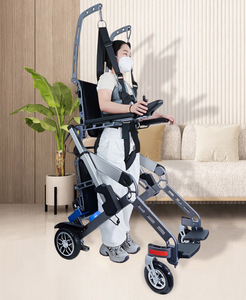
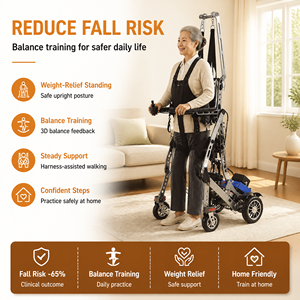
Automated wheelchairs are no longer limited to passive transportation. The integration of active dynamic standing mechanisms and assisted gait training robotics allows a single device to function as an electric wheelchair, a standing rehabilitation frame, and a mobility trainer. Devices equipped with dual-motor lift actuators enable patients with lower-limb impairments to transition safely from sitting to standing posture, promoting bone density, cardio-respiratory health, and urinary tract function.
The next frontier in automated wheelchairs involves sensor fusion combining ultrasonic proximity sensors, 3D LiDAR, and camera vision systems. Integrated AI microprocessors enable features such as:
Battery chemistry remains crucial for international buyers. Lead-acid batteries have been completely displaced by Lithium Iron Phosphate (LiFePO4) and Ternary Lithium (NMC) cells due to their higher energy density, longer cycle life (1500+ cycles), and zero memory effect. Future automated power chairs are incorporating 45-minute fast-charging protocols and smart Battery Management Systems (BMS) with real-time cell balancing, thermal protection, and CAN-bus communication to communicate state-of-health directly to the controller digital interface.
Strategic guidance for international procurement officers, healthcare distributors, and brand managers.
Navigating global supply chain dynamics requires B2B importers to adapt their procurement strategies. Key sourcing trends shaping the 2026–2030 automated wheelchair landscape include:
Global distributors are moving away from stocking dozens of distinct, incompatible wheelchair models. Instead, they demand modular platform architectures. A unified chassis design that supports interchangeable battery capacities (12Ah vs. 20Ah), motor specs (200W vs. 350W brushless), controller options (PG Drives vs. Brushless Vector Controllers), and seating accessories drastically reduces local spare parts inventory holding costs for importers.
Regulatory bodies such as the US FDA, European Medicines Agency (EMA), and MHRA are heightening scrutiny over imported medical devices. Importers must partner with Chinese and Taiwanese manufacturers that provide complete Technical Documentation Files (TDF), Risk Management Assessment (ISO 14971), Electromagnetic Compatibility (IEC 60601-1-2) test reports, and full component lot traceability. Manufacturers with pre-registered FDA 510(k) clearances and CE MDR certificates provide a substantial time-to-market advantage.
Savvy procurement teams prioritize Total Cost of Ownership (TCO) rather than looking solely at the initial FOB price. High-quality automated wheelchairs utilizing brushless motors, electromagnetic brakes, and premium lithium cells experience warranty return rates below 0.5%, whereas low-cost brushed motor units often suffer 5%–8% field failure rates within the first year. The resulting warranty labor, replacement shipping, and brand damage far outweigh initial purchasing savings.
Environmental, Social, and Governance (ESG) criteria are becoming mandatory in public healthcare tenders across North America and Western Europe. Manufacturers implementing eco-friendly powder coating lines, recyclable magnesium alloys, compliant lithium recycling pipelines, and solar-powered assembly facilities are gaining preference in government supply contracts.
Expert answers addressing critical technical, regulatory, and logistical questions for global buyers.
Whether you require turn-key OEM/ODM manufacturing, private label distributor agency, or custom rehabilitation robotic engineering, our technical sales team is ready to assist your business goals.