


Engineered for commercial resorts, golf courses, passenger transport, and off-road utility applications. Built under ISO 13485 and CE certified quality management systems.
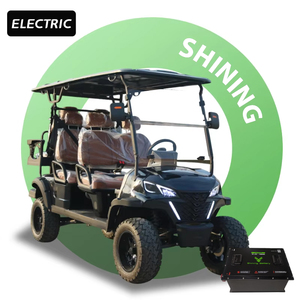
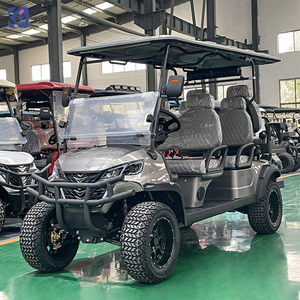
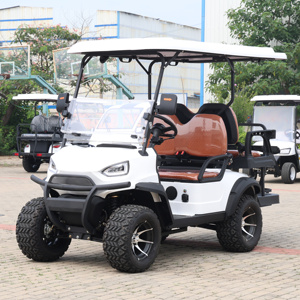
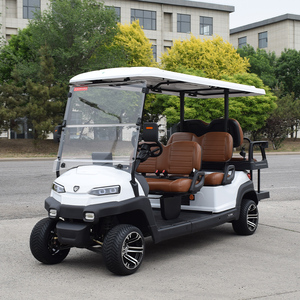
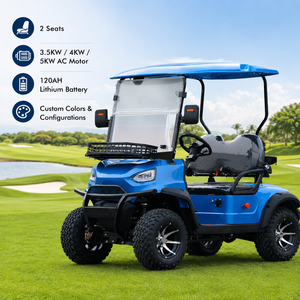
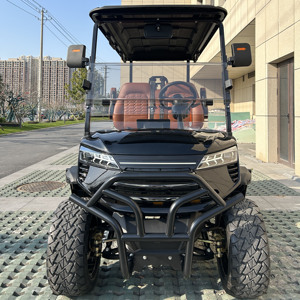
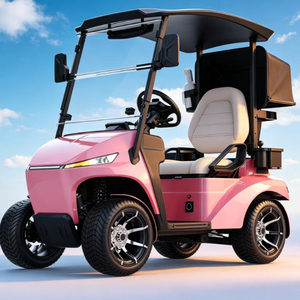
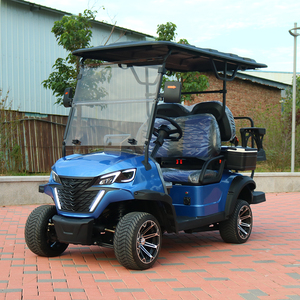
An authoritative technical analysis of manufacturing practices, structural metallurgy, powertrain efficiency, and quality assurance protocols across top Chinese electric vehicle exporters.
The global shift toward commercial micro-mobility, resort transport, and eco-friendly utility transit has accelerated the growth of China’s low-speed electric vehicle (LSEV) and electric buggy manufacturing sector. As international buyers, fleet operators, and distributors seek high-performance, street-legal electric buggies, evaluating factory capabilities requires looking beyond superficial aesthetics. Professional procurement demands a deep technical understanding of chassis architecture, electronic stability controls (ESC), battery management systems (BMS), motor torque density, and international regulatory compliance (FDA, CE, ISO 13485, EEC/CoC).
Leading Chinese exporters and manufacturers—backed by decades of mechanical engineering experience and advanced electromechanical integration—have transitioned from assembling basic golf carts to fabricating automotive-grade electric buggies. Incorporating advanced technologies such as lightweight T6-treated aluminum alloy frames, independent double A-arm wishbone suspensions, high-efficiency AC induction/PMSM brushless motors, and smart LiFePO4 battery banks, modern Chinese electric buggy factories now set international standards for reliability, comfort, and operating range.
Top China factories utilize robot-welded high-tensile carbon steel or 6061-T6 aluminum frames treated with electrophoretic cathodic dip coating (ED Coating). This provides 15+ years of anti-corrosion protection in harsh coastal resort environments.
Transitioning from legacy brushed DC motors, premier buggies feature 3.5kW to 7.5kW AC induction and Permanent Magnet Synchronous Motors (PMSM) controlled by programmable Curtis or Sevcon AC controllers for smooth torque vectoring and hill-climb capability up to 30% incline.
Safety standards incorporate Electronic Stability Control (ESC), automatic electromagnetic parking brakes, hydraulic four-wheel disc brakes, shatterproof laminated windshields, and automotive-grade LED lighting setups required for DOT / EEC street-legal certification.
A granular side-by-side comparison of component configurations commonly specified across commercial electric buggy procurement tiers.
| Engineering Parameter | Standard Entry-Level Buggy | Commercial Resort & Shuttle Buggy | Heavy-Duty Off-Road / Luxury Buggy |
|---|---|---|---|
| Nominal Voltage Architecture | 48V System (DC / Basic AC) | 48V - 72V High-Efficiency AC | 72V - 96V High-Torque PMSM |
| Motor Power Rating | 3.0 kW - 3.5 kW DC Motor | 4.0 kW - 5.0 kW AC Induction Motor | 5.0 kW - 10.0 kW PMSM Motor (Dual Drive Available) |
| Battery Technology & BMS | Flooded Lead-Acid / AGM (6-8V cells) | Maintenance-Free AGM or LiFePO4 | Smart LiFePO4 with Automotive CAN-Bus BMS |
| Chassis Frame Material | Standard Tubular Q235 Steel | Electrophoretic Dip Coated (ED) Steel | 6061-T6 Aircraft-Grade Aluminum Alloy Frame |
| Suspension System | Front Rigid Axle / Rear Leaf Spring | Independent MacPherson / Double Wishbone | Double A-Arm Independent Suspension + Hydraulic Shocks |
| Braking Architecture | Rear Mechanical Drum Brakes | Four-Wheel Hydraulic Drum/Disc Brakes | Four-Wheel Hydraulic Disc + Electromagnetic Auto Park Brake |
| Maximum Speed Range | 24 - 30 km/h (15 - 18 mph) | 30 - 40 km/h (18 - 25 mph) | 40 - 60 km/h (25 - 38 mph, EEC Street Legal) |
| Cruising Range per Charge | 40 - 60 km (25 - 37 miles) | 70 - 90 km (43 - 56 miles) | 90 - 130 km (56 - 80+ miles) |
Anticipate shift dynamics in global supply chains, battery chemistry migration, IoT fleet connectivity, and custom OEM/ODM development strategies.
Traditional lead-acid batteries are rapidly being phased out by overseas distributors due to weight penalties, slow charging curves, and toxic maintenance liabilities. High-density Lithium Iron Phosphate (LiFePO4) battery packs featuring integrated Battery Management Systems (BMS) offer 3,500+ charge cycles, zero maintenance, fast 2-hour charging capabilities, and over 60% weight reduction, boosting buggy energy efficiency by up to 35%.
Modern resort and golf course operators require real-time visibility into vehicle health and location. Leading Chinese exporters now offer factory-fitted 4G/GPS telematics modules that provide remote geofencing, automated speed limiting, remote battery state-of-charge (SoC) diagnostics, anti-theft tracking, and predictive maintenance alerts accessible via web dashboards or mobile applications.
Demand for dual-use buggies that seamlessly transition from closed resorts to public roads is surging. Exporters are engineering models specifically for European EEC L7e micro-mobility standards and US DOT Low-Speed Vehicle (LSV) guidelines—incorporating three-point safety belts, certified tempered glass windshields with wipers, turn signal indicators, digital dashboards, and VIN registration codes.
Monocrystalline solar roof panels integrated into buggy hardtops provide auxiliary charging during daylight operation. Generating up to 250W-400W of continuous solar energy, these integrated roofs extend operational range by 15-25 km per day, reduce reliance on grid electricity, and extend total battery operational lifespan by minimizing deep discharge cycles.
Successful B2B procurement relies on robust manufacturing engineering, stringent quality assurance, and seamless global logistics support. Grounded in decades of advanced electromobility and specialized vehicle manufacturing experience, top-tier Chinese manufacturers provide unmatched competitive advantages for international importers and distributors:
Expert technical answers to common questions asked by international buyers, fleet procurement managers, and commercial importers.
For European imports, commercial electric buggies require CE certification under Machinery Directive 2006/42/EC and Low Voltage Directive 2014/35/EU. For public road use (street legal), vehicle models must hold EEC/CoC (Certificate of Conformity) L7e homologation. For North America, buggies sold as Low-Speed Vehicles (LSV) must comply with US DOT (Department of Transportation) safety standards, SAE J2258 guidelines, and hold EPA/FDA registration where applicable.
A 72V system operates at lower current (amperage) levels for equivalent power output compared to a 48V system, significantly reducing heat generation in the wiring harness, motor, and controller. This results in 15-20% higher energy efficiency, superior hill-climbing torque on steep gradients (up to 30%), higher top speeds (up to 50+ km/h), and reduced thermal stress on electrical components during continuous heavy-duty passenger transport.
Lithium Iron Phosphate (LiFePO4) batteries typically deliver 3,500 to 5,000 full charge cycles at 80% Depth of Discharge (DoD), equivalent to an operational lifespan of 8-10 years. Standard lead-acid or AGM batteries offer only 500 to 800 cycles (approx. 2-3 years) and require routine distilled water replenishment. LiFePO4 batteries also accept opportunity fast-charging without memory degradation.
Semi-Knocked Down (SKD) shipping involves shipping fully assembled chassis units with only wheels, seats, and roof panels removed, allowing quick 15-minute assembly at the destination. Completely Knocked Down (CKD) shipping disassembles the buggy into core sub-assemblies (chassis frame, powertrain, suspension, body panels), increasing 40ft High Cube container capacity from 8-12 units (SKD) up to 24-36 units (CKD), drastically reducing per-unit freight overhead for high-volume distributors.
Yes. OEM customization capabilities include custom Pantone color matching, metallic and matte finish options, marine-grade anti-UV leather seating with custom stitching, modular rear flip-flop seats that convert into flat cargo beds, enclosed rain covers, heavy-duty towing hitches, overhead sound bars, and custom laser-etched dealer logos.
Independent double wishbone (A-arm) suspension systems allow each wheel to react independently to terrain irregularities, maintaining optimal tire contact and vehicle stability on uneven ground. Combined with front and rear hydraulic disc brakes, low-center-of-gravity chassis designs, roll-over protection structures (ROPS), and automatic electromagnetic hill-hold brakes, off-road buggies prevent roll-back and loss of control on extreme inclines.
Leading Chinese exporters provide comprehensive factory warranties: 3-5 years on chassis frames, 2-3 years on LiFePO4 battery packs, and 1-2 years on motors, AC controllers, and electrical axles. Technical support includes direct access to senior mechanical engineers, digital CAN-bus diagnostic tools, video technical assistance, and free replacement spare parts included with container shipments.
Operating range varies based on total vehicle payload, terrain gradient, and driving speed. A fully loaded 6-seater electric buggy (approx. 500-600 kg payload) equipped with a 72V 100Ah LiFePO4 battery typically achieves a real-world range of 70 to 80 km per charge on flat asphalt, compared to 90-100 km under light payload conditions. Regenerative braking systems recover up to 12% of energy during downhill deceleration, optimizing overall efficiency.
Connect with our technical engineering team to request factory pricing, OEM/ODM customization blueprints, ISO test reports, and container delivery schedules.