


Explore our benchmark mobility solutions engineered for high durability, lightweight portability, and strict adherence to European CE Medical Device Regulations (MDR) and global quality standards.
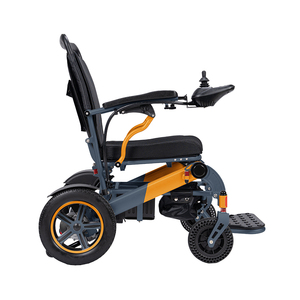
Integrated with smart remote control automation, high-efficiency brush/brushless power drive, and aircraft-grade ultralight frame alloy structure.
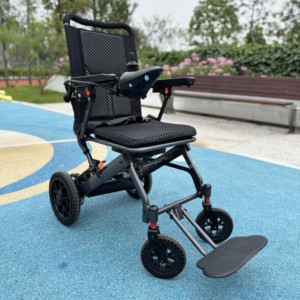
Designed for elderly and handicap outdoor daily mobility featuring extended dual-battery range, compact footprint, and easy trunk storage.
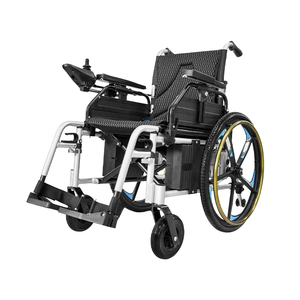
High-torque 24-inch rear drive wheelhub motors providing superior obstacle clearance, enhanced stability, and high weight capacity support.
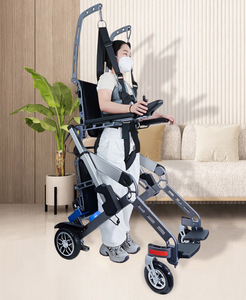
Advanced gait training assisted walking robot with dual standing-sitting pneumatic positioners and lithium battery smart power system.
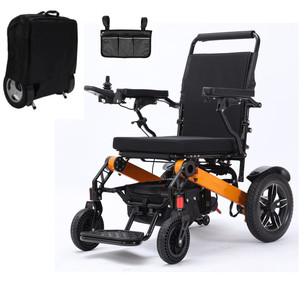
Ultra-portable travel chassis designed for quick disassembly, air transport compliance, and optimal cost-efficiency for wholesale distributors.
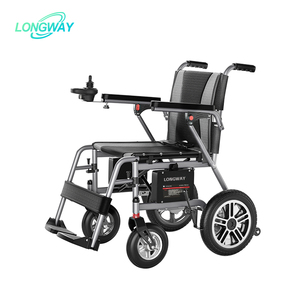
Ergonomic seating with intelligent micro-controller unit, lithium-ion quick battery release, and smooth electronic braking control.
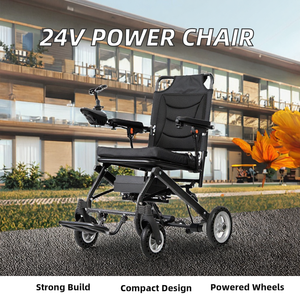
Engineered with high-torque dual motors for steep incline climbing, heavy-duty shock absorption, and long-range outdoor versatility.
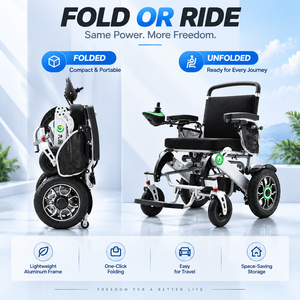
Precision-crafted lightweight frame optimized for indoor tight turns and seamless transit across public transportation and car trunks.
With over two decades of precision mechanical and electrical engineering expertise, Eurogreen International Inc. serves as the premium OEM/ODM backbone for world-leading mobility device brands.
Our carbon fiber and lightweight power wheelchairs incorporate advanced Electronic Stability Control (ESC). Intelligent sensor arrays actively prevent dynamic tip-overs, adjusting motor torque during sharp turns or steep downslopes.
Utilizing high-tensile 3K Japanese carbon fiber prepreg material, our dedicated factory lines achieve unyielding frame rigidity while shedding up to 45% of total structural frame weight compared to conventional steel.
From initial CAD modeling, structural finite element analysis (FEA), to customized BMS firmware development and branding packaging, we deliver end-to-end manufacturing solutions for global distributors.
The global mobility hardware market is experiencing a structural shift driven by advanced material science, micro-mobility powertrains, and rigorous European health standards. Traditional power wheelchairs relied heavily on tubular steel or heavy aluminum alloys, resulting in base chassis weights exceeding 30 to 50 kilograms. Today, CE Certified Carbon Wheelchair Manufacturers are completely redefining personal mobility through high-modulus carbon fiber reinforced polymers (CFRP).
Carbon fiber manufacturing for medical mobility devices requires strict control over resin-to-fiber ratios, autoclave pressure curing, and multi-axial layering. Leading factories utilize Toray T700 or T800 grade carbon prepreg laid in 0°/45°/90° directional orientations. This specific weave architecture maximizes torsional stiffness while providing exceptional vibration damping during transit on uneven cobblestones or off-road terrains.
| Material Metric | Standard Steel Frame | 6061-T6 Aluminum Alloy | Toray 3K Carbon Fiber (CFRP) |
|---|---|---|---|
| Tensile Strength (MPa) | 400 - 550 | 290 - 310 | 3500 - 4900 |
| Density (g/cm³) | 7.85 | 2.70 | 1.55 - 1.60 |
| Frame Weight (Bare) | 12.5 kg | 6.8 kg | 2.9 kg - 3.4 kg |
| Fatigue Resistance Cycle | 50,000 Cycles | 100,000 Cycles | > 500,000 Cycles |
| Vibration Absorption Rate | Low | Moderate | Superior (4x Aluminum) |
Weight reduction achieved through carbon fiber framing is supplemented by advances in electrical propulsion. Contemporary power wheelchairs are phasing out legacy brushed motors in favor of high-efficiency Brushless DC (BLDC) outer-rotor hub motors. Driven by Field Oriented Control (FOC) vector sine-wave controllers, these drive systems offer silent operation, up to 92% electrical efficiency, and instant regenerative braking capabilities that recharge the lithium battery during downhill descents.
Commercial mobility compliance requires rigorous battery safety protocols. CE-certified carbon power wheelchairs utilize high-energy-density LiFePO4 (Lithium Iron Phosphate) or NMC 18650/21700 cell configurations. Integrated Battery Management Systems (BMS) continuously monitor individual cell voltage, thermal thresholds, short-circuit loops, and overcharge current. Crucially, meeting UN38.3 aviation transport testing enables end-users to carry their mobility devices onto commercial aircraft without regulatory friction.
As healthcare systems in Europe and North America shift toward home-care and independent living models, procurement criteria for mobility device importers, OEM brand owners, and regional medical distributors are evolving rapidly.
The transition from the old Medical Device Directive (MDD 93/42/EEC) to the European Union's strict Medical Device Regulation (MDR 2017/745) has raised the entry barrier for manufacturers. CE certified factories must maintain full technical documentation, post-market surveillance (PMS), UDI (Unique Device Identification) compliance, and ISO 13485 certified quality management systems. Buyers must audit prospective OEM suppliers to ensure test reports for EN 12184 (Electric wheelchairs, scooters, and chargers testing) are fully up to date.
Modern distributors no longer buy off-the-shelf commoditized items. Success in competitive national markets depends on private-label customization—ranging from branded MCU joystick responsiveness tuning, ergonomic seat dimensions, quick-release carbon frame colors, to proprietary folding kinematics. Factories with in-house CNC tooling, carbon mold fabrication, and dedicated software engineering offer distinct competitive advantages to global importers.
While carbon fiber power wheelchairs command a higher initial procurement price point than traditional alloy units, their overall life-cycle warranty cost is dramatically lower. The combination of corrosion-resistant carbon composite frames, brushless motors, and solid-state controller electronics reduces field failure rates to under 0.05%. This low maintenance demand protects distributor profit margins and builds long-term consumer trust.
Essential insights for medical device buyers, distributors, and supply chain managers seeking reliable OEM/ODM carbon wheelchair manufacturing partners.
Expand your commercial mobility product catalog with certified, ultra-lightweight carbon fiber and smart folding electric wheelchairs. Contact our engineering team for technical datasheets, factory audit reports, and competitive B2B wholesale pricing.