


SupaMobility Knowledge Hub and Blog Banner
News & Insights

Mobility Solutions & Industry Blog

Expert articles, maintenance guides, and technology updates on mobility scooters and power wheelchairs.

SupaMobility Manufacturing Insights Banner
OEM / ODM Knowledge

Innovations in Personal Mobility

Discover tips for selecting folding scooters, travel wheelchairs, and OEM/ODM private label solutions.

0%

Choosing the right travel scooter can make airports, hotel corridors, and busy sidewalks feel less demanding. This guide explores the Top 10 Best Travel Mobility Scooters for Easy Travel, focusing on portability, comfort, stability, battery range, and everyday reliability. Travel Mobility Scooters differ greatly in folding design, seat support, ground clearance, and maximum user weight. A model weighing 40 pounds may fit a car trunk easily, while another offers better stability on uneven pavement. Small details matter.

The selections are based on manufacturer specifications, practical travel features, user-focused design, and safety considerations. We also examine charging time, removable batteries, turning radius, control layout, and transport convenience. Always check the current manual. Airline and transport policies can change, especially for lithium batteries and mobility equipment. A scooter advertised as “travel-friendly” may still feel heavy when lifted repeatedly. That trade-off deserves attention.

Comfort matters too.

A short airport journey may expose pressure points, limited legroom, or weak suspension. Reliable brakes, responsive controls, and a supportive seat can improve confidence during unfamiliar trips. However, no single scooter suits every traveler. A lightweight frame may sacrifice range, while a longer-lasting battery can increase total weight. Personal testing remains valuable whenever possible. The goal is not to promise a perfect choice, but to clarify realistic strengths and limitations. With careful comparison, travelers can select a mobility scooter that matches their body, itinerary, storage space, and preferred level of independence.
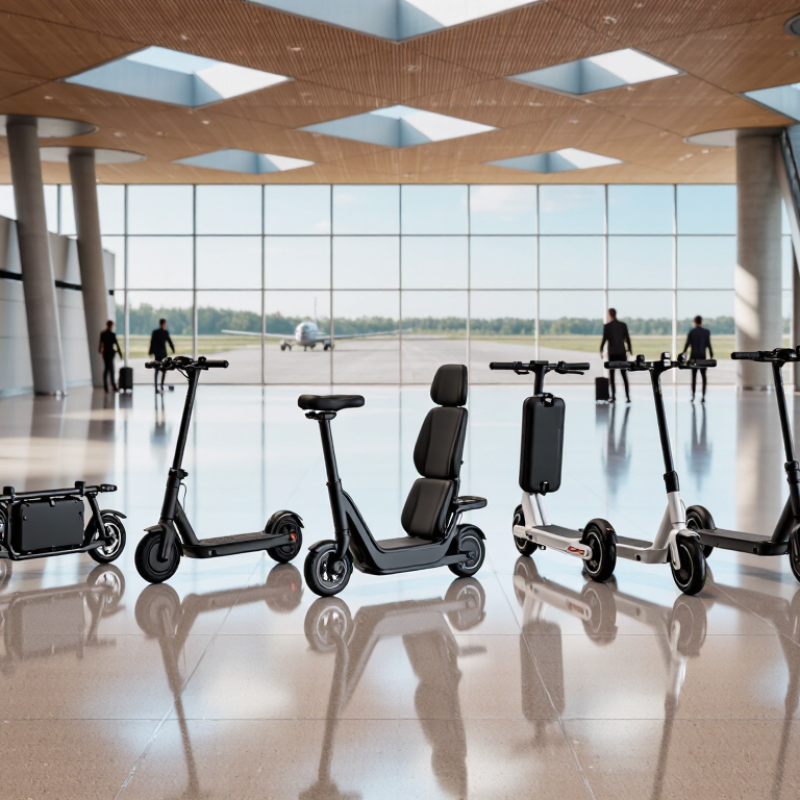
Top 10 Best Travel Mobility Scooters for Easy Travel

What Makes a Mobility Scooter Suitable for Travel

A travel mobility scooter is not simply a smaller scooter. It should be light enough to lift, fold, or dismantle without excessive strain. Compact dimensions matter in hotel lifts, train aisles, and narrow café entrances. A stable frame also matters, especially on uneven pavements or sloped airport walkways. Look for a comfortable seat, clear controls, and enough battery range for a realistic day trip. Claimed range may decrease with hills, cold weather, passenger weight, or frequent stopping. That detail is easy to overlook.

Tips: Measure your car boot first. Check the scooter’s heaviest removable part. Confirm battery requirements with airlines and transport operators before departure. Pack the charger in an accessible bag. A short practice route can reveal awkward steering, weak brakes, or uncomfortable seating before the journey begins.

Good travel models balance portability with safety. Small wheels can save space, but they may struggle over cobblestones, grass, or broken pavements. Test turning inside a narrow room. Test stopping on a gentle slope. These simple checks provide better evidence than attractive specifications. I would also leave some battery capacity unused, because unfamiliar streets often take longer than expected. A scooter that feels perfect indoors may feel less convincing outside. Personal comfort, handling confidence, and reliable support should guide the final choice.

Top 10 Best Travel Mobility Scooters for Easy Travel

What makes a mobility scooter suitable for travel?

Travel-friendly mobility scooters are generally easier to transport when they are lightweight, compact when folded, airline-compatible where permitted, and simple to disassemble. Longer battery range, a tight turning radius, solid safety features, and convenient controls also improve travel usability. The figures shown are practical target ranges commonly used when comparing portable scooter designs; airline and transport requirements may vary.

Key Features to Compare in Travel Mobility Scooters

When comparing travel mobility scooters, I start with folded size and actual carry weight. A scooter may fit a car trunk, yet feel awkward on stairs. Measure the storage space before buying. Check whether the heaviest section is manageable for you or a travel partner. A tight turning radius helps in hotel corridors and crowded cafés. However, very compact models can feel less stable on uneven pavement. That trade-off deserves an honest test.

Battery performance needs careful attention. Look for the tested travel range, not only the advertised figure. Cold weather, hills, passenger weight, and frequent stops can reduce distance. Removable batteries simplify charging in a hotel room, but connectors should feel secure and protected. Ask about charging time, battery weight, and replacement access. For air travel, confirm current carrier requirements before departure. Acceptance is not automatic.

Comfort matters after the first hour. Compare seat width, back support, legroom, suspension, and handlebar adjustment. Try turning, reversing, and stopping on a gentle slope. Controls should be readable without forcing your wrist. Brakes must respond smoothly, while lights or reflectors improve visibility near dusk. A basket is useful, though extra load can affect balance. I would record these checks, because memory becomes unreliable after several showroom visits. One overlooked detail can spoil an otherwise promising trip.

Top 10 Travel Mobility Scooters by Performance and Portability

Top 10 Best Travel Mobility Scooters for Easy Travel

Top 10 Travel Mobility Scooters by Performance and Portability

The best travel mobility scooters balance useful power with simple transport. This top-ten selection prioritizes battery range, turning control, ground clearance, and folded weight. A scooter that climbs a gentle ramp confidently may still feel awkward inside a small car. Real travel exposes those differences quickly.

Performance matters most on sidewalks, hotel corridors, and uneven pavement. Look for steady acceleration, responsive brakes, and a comfortable tiller position. A practical range of 10 to 15 miles can suit day trips, but hills, rider weight, temperature, and luggage reduce it. Manufacturer figures are useful, not guaranteed. Small frame, real benefit.

Portability depends on more than total weight. Removable battery packs, folding mechanisms, and balanced lifting points make airport transfers easier. Measure your vehicle’s trunk before choosing a model. Check airline and transport policies for battery requirements before departure. Some compact scooters turn neatly but provide less legroom. That trade-off can become tiring after several hours. In my view, the strongest choices are not always the lightest ones. I would accept a few extra pounds for better stability, stronger suspension, and a seat that does not wobble. Still, this judgment is personal and should be tested with your own doorway, loading routine, and travel habits.

How to Choose a Scooter for Different Travel Needs

Top 10 Best Travel Mobility Scooters for Easy Travel

Choosing a travel mobility scooter starts with the journey, not the scooter. The WHO and UNICEF Global Report on Assistive Technology estimates that 2.5 billion people need assistive products worldwide. That number may exceed 3.5 billion by 2050. Travel needs are becoming more diverse.

For airports, choose a lightweight model with a tight turning radius. A removable battery can simplify handling and airline checks. IATA Dangerous Goods Regulations require specific battery documentation and handling procedures. Confirm the battery type before booking. For car trips, measure the trunk opening carefully. A folding scooter may save space, but it can sacrifice seat comfort and suspension. For cruises or uneven paths, prioritize ground clearance, stable tires, and a realistic range. Advertised range often assumes ideal conditions. Real travel includes hills, luggage, and frequent stops. I learned this the hard way.

Tips: Write down your daily route. Include hotel corridors, ramps, elevators, and restroom access. Test the scooter for twenty minutes before traveling. Check braking, steering, and battery removal. Carry charging instructions and emergency contact details. Keep a small repair kit nearby. Ask the transport provider about storage rules before departure, not at the terminal. That timing mistake is easy to make.

Top 10 Best Travel Mobility Scooters for Easy Travel — How to Choose a Scooter for Different Travel Needs

The options below are travel-scooter styles matched to common travel needs, not specific products. Figures are broad, indicative ranges commonly found in this category; actual weight, range, speed, capacity, folding method, and battery details vary by model. Check the manufacturer’s specifications and your airline or transport provider’s rules before travelling.

Travel Scooter Style Best For Typical Advertised Range Typical Top Speed Portability Main Advantages Points to Check
1. Ultra-light folding scooter Frequent flyers, short city visits, and travellers with limited storage space About 6–10 miles per charge Often around 3–4 mph Folds into a compact form; some designs have a very low overall weight Easy to store and convenient for short trips Confirm folded dimensions, lifting weight, seat comfort, and whether the battery can be removed
2. Automatic-folding scooter Travellers who want to fold and unfold the scooter with minimal manual effort About 6–12 miles per charge Often around 3–4 mph Folds using a powered mechanism; usually heavier than the lightest manual-folding designs Convenient operation and a tidy folded shape for storage Check folded size, total weight, folding method, and how the mechanism operates if the battery is depleted
3. Compact four-wheel scooter Travellers who want added stability on paved paths and indoor routes About 8–15 miles per charge Often around 4 mph Typically separates into several pieces for transport Four-wheel layout can feel steady; suitable for everyday errands and holiday destinations Check the weight of the heaviest separated piece and the space needed in a vehicle
4. Compact three-wheel scooter Indoor use, shops, museums, and other places with tight turns About 8–15 miles per charge Often around 4 mph Many models disassemble; some are designed to be relatively compact A tighter turning circle can help in narrow aisles and confined spaces Compare turning space and stability; three-wheel layouts may feel less stable than four-wheel layouts on uneven ground
5. Lightweight disassembly scooter Road trips where the scooter will be loaded into a car boot About 8–15 miles per charge Often around 4 mph Breaks into transportable sections; the heaviest piece varies considerably Can be easier to lift and pack than a one-piece scooter Ask for the weight of each individual section, not just the scooter’s total weight
6. Long-range travel scooter Full days out when charging opportunities may be limited Some models advertise about 12–20 miles per charge Often around 4–5 mph Usually larger or heavier than ultra-compact travel designs Greater advertised range can reduce the need for midday charging Real-world range can be lower due to passenger weight, terrain, temperature, battery condition, and frequent stops
7. Higher-capacity travel scooter Users who need a higher supported weight limit in a portable format About 8–15 miles per charge, depending on the model Often around 4 mph Portability varies; higher-capacity designs may be heavier or less compact Offers a choice of travel-focused designs with higher stated weight capacities Check the exact maximum user weight and remember that added load can reduce range
8. Comfort-focused travel scooter Longer outings where seat support and ride comfort matter most About 8–15 miles per charge Often around 4 mph May disassemble, but larger seats and comfort features can increase size and weight More supportive seating or adjustable features may suit longer periods of use Test seat fit, legroom, controls, and whether the scooter fits through doorways and into the vehicle
9. All-terrain-leaning compact scooter Outdoor destinations with firmer uneven paths, such as parks and paved trails About 8–15 miles per charge Often around 4–5 mph Generally less compact than the smallest folding scooters Larger wheels or increased ground clearance may handle mild surface changes better “All-terrain” does not mean suitable for every surface; check tyre type, clearance, slope limits, and weather guidance
10. Airline-planning travel scooter Air travel when battery and handling requirements are a priority About 6–15 miles per charge, depending on the design Often around 3–4 mph Folding or disassembly options are available; handling procedures differ by model Travel-oriented designs can make packing and transport planning more manageable Contact the airline before booking. Confirm battery chemistry, watt-hours, removability, documentation, and handling requirements; approval is not automatic

Packing, Transporting, and Using a Mobility Scooter Safely

Travel mobility scooters make airports, stations, and hotel corridors more manageable, but preparation matters. The World Health Organization reports that about 1.3 billion people, or 16% of the global population, experience significant disability. That scale demands practical accessibility, not assumptions. Measure the folded scooter, its heaviest section, and your storage space before booking. Photograph the battery label and keep its watt-hour rating visible. Airline staff may need this information.

Remove loose baskets, mirrors, and cushions before transport. Wrap the tiller and controls with foam, not thin clothing. Secure moving parts with soft straps. Never lift alone if the frame feels unstable. A short practice lift at home can reveal poor grip points. IATA guidance recommends confirming mobility-aid battery requirements with the carrier before departure, especially for lithium batteries. Rules can differ by aircraft and route. Check again.

At the terminal, request assistance early, then explain how the scooter folds and rolls. Keep medication, documents, and removable battery components accessible when permitted. The U.S. Department of Transportation’s Air Travel Consumer Report tracks thousands of disability-related complaints each year, showing that communication failures remain common. I have found that a printed instruction card helps, though it is not foolproof. During use, slow down near ramps, wet floors, and crowded lifts. Charge only with the approved charger, and inspect cables for heat or damage. Leave extra time. Travel plans rarely survive every delay.

FAQS

What makes a mobility scooter suitable for travel?

It should be light, compact, stable, and comfortable. It should fit through hotel lifts and narrow café entrances. Not always perfectly.

How can I check whether it fits my car?

Measure the boot opening and storage depth first. Check the heaviest removable section. A scooter may fit, yet still feel awkward to lift.

What battery details should travelers compare?

Check tested range, charging time, battery weight, and replacement access. Hills, cold weather, heavy loads, and frequent stops reduce range. Leave some capacity unused.

What should I confirm before flying?

Contact the carrier before departure. Ask about battery type, watt-hours, removal, packing, and handling procedures. Requirements can change.

Are smaller wheels always better for travel?

Small wheels save storage space and improve indoor handling. However, they may struggle on cobblestones, grass, or broken pavements. Test real surfaces.

How can I test comfort before buying?

Sit for more than a few minutes. Check seat width, back support, legroom, and handlebar position. Try turning, reversing, and stopping gently.

How should I prepare a scooter for transport?

Remove loose baskets, mirrors, and cushions. Protect controls with foam and secure moving parts with soft straps. Do not lift an unstable frame alone.

What safety habits help during a journey?

Slow down near ramps, wet floors, and crowded lifts. Use the approved charger and inspect cables for heat or damage. Leave extra time.

Conclusion

Travel Mobility Scooters are designed to make journeys more comfortable, convenient, and independent for people with limited mobility. The best models balance portability, stability, comfort, and battery performance while remaining easy to fold, lift, or transport. Important features to compare include overall weight, folded size, travel range, charging options, seat comfort, turning radius, safety controls, and compatibility with cars, trains, airplanes, and other forms of transportation. A thoughtful comparison of the top ten options can help travelers identify models suited to different priorities, whether they need maximum portability, longer range, stronger outdoor performance, or simple everyday handling.

Choosing the right scooter also depends on the destination and travel style. Before leaving, users should review transport requirements, protect removable parts, secure the scooter properly, and plan charging during the trip. Safe operation includes checking the battery, tires, brakes, and controls, following local accessibility guidance, using appropriate speed, and avoiding uneven or hazardous surfaces. With careful selection, packing, and responsible use, a travel scooter can support safer, smoother, and more enjoyable travel experiences.

Evelyn

Evelyn

Evelyn is a dedicated marketing professional with a strong understanding of product strategy, customer needs, and digital communication. As a key contributor to the company’s content team, she regularly publishes insightful articles on the corporate website, helping readers better understand......