


Expert articles, maintenance guides, and technology updates on mobility scooters and power wheelchairs.
Discover tips for selecting folding scooters, travel wheelchairs, and OEM/ODM private label solutions.
Choosing the right Heavy-Duty Mobility Scooters requires more than checking the highest weight capacity. Comfort, stability, battery range, and everyday handling matter just as much. A scooter that looks powerful in a showroom may feel awkward on a narrow ramp or uneven pavement.
Real-world use matters.
This guide introduces ten practical tips for making a safer, more informed purchase. It considers seat width, suspension, turning radius, tire design, ground clearance, and battery performance. These details become important when traveling across gravel, wet sidewalks, steep driveways, or crowded store aisles. Manufacturer specifications should be checked carefully, not accepted at a glance. Weight limits include the rider and carried items, such as groceries or oxygen equipment.
Professional advice can also improve the decision. A mobility specialist, occupational therapist, or experienced dealer may identify posture and transfer needs that online descriptions miss. Testing the scooter in person is valuable. Sit for several minutes. Turn slowly. Reach the controls. Check whether your feet rest naturally and whether the tiller feels steady.
No checklist is perfect.
A higher capacity does not automatically guarantee a better ride. Some models offer impressive range but have bulky frames or difficult charging arrangements. Think about storage, transport, warranty coverage, and service access before paying. This introduction sets the direction for ten buying tips designed to support comfort, reliability, and confident daily mobility.
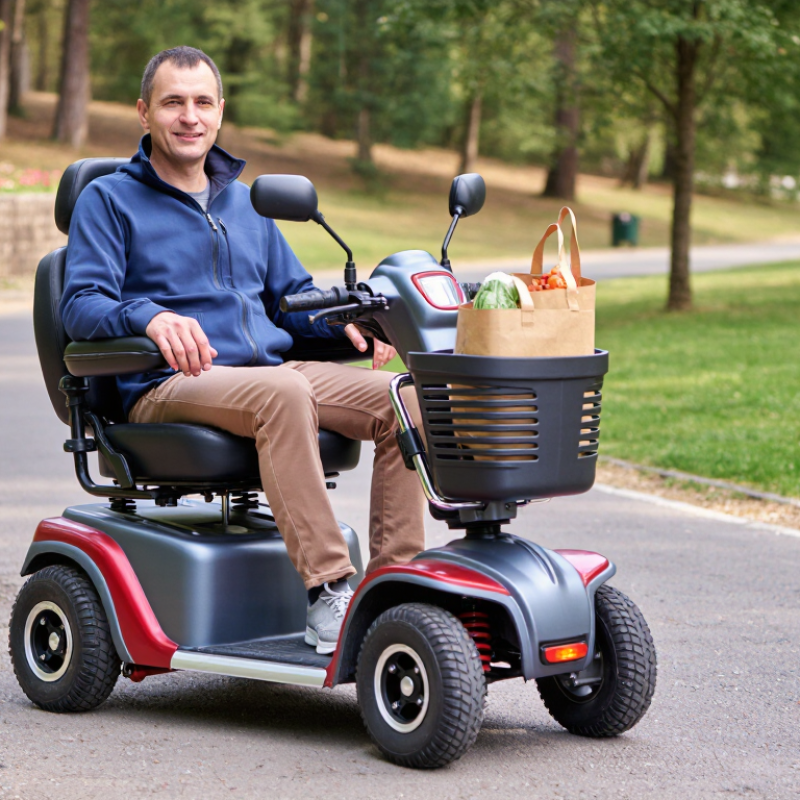
Choosing a heavy duty mobility scooter begins with your daily movement, not its advertised power. Consider how far you travel, how often you stop, and whether you ride alone. Measure doorways, lift entrances, storage areas, and turning spaces at home. A scooter may feel stable outdoors but become awkward in a narrow hallway.
Inspect the riding environment carefully. Smooth pavements require different features from gravel paths, steep driveways, or uneven rural roads. Check ground clearance, tyre design, braking response, lighting, and weather protection. If your route includes a busy crossing, clear controls and dependable visibility matter greatly. Ask a qualified mobility specialist to assess slopes and surface conditions. A short test ride is useful, but one parking-lot turn cannot represent real life.
Think about comfort during longer journeys. Sit for several minutes and check legroom, back support, armrest position, and steering effort. Try turning slowly, reversing, and stopping on a gentle incline. Can you reach the controls without leaning? Can you transfer safely from your usual chair? These details are easy to overlook. I would also question whether maximum speed is truly useful. More power may add weight, charging demands, and transport problems. That trade-off deserves honest reflection. Check the manual, warranty terms, battery guidance, and local servicing options before buying.
Include the rider, batteries, basket, oxygen equipment, and personal items. A scooter rated for 400 pounds may carry less in real conditions. Compare the rating with your heaviest expected load. The WHO and UNICEF Global Report on Assistive Technology (2022) estimates that 2.5 billion people need assistive products worldwide. Fit, reliability, and safe daily use therefore matter more than appearance.
Ask whether stability testing follows ISO 7176-1. Check the wheelbase, tire width, anti-tip wheels, turning radius, and maximum safe slope. A wide platform can feel secure, yet a tall seat may raise the center of gravity. Test slow turns, curb approaches, and uneven pavement with supervision. Do not trust one short showroom ride.
Look for a reinforced frame, strong welds, protected wiring, durable suspension, and high-clearance tires. Ask for evidence from ISO 7176 performance testing, including braking and range methods. Range usually changes with rider weight, temperature, hills, and tire pressure. That detail is often missed. A larger battery also adds weight and may complicate transport.
Confirm brake checks, battery replacement costs, charger requirements, and service access. Measure your doorway, vehicle ramp, and storage floor. A scooter can be powerful but impractical. I would also request the written load limit and slope guidance, because verbal promises are easy to misunderstand.
10 Tips for Buying Heavy Duty Mobility Scooters
Battery range deserves more attention than the biggest number in an advertisement. The WHO Global Report on Assistive Technology estimates that over 2.5 billion people need assistive products worldwide. Reliability matters. Ask whether the quoted range follows ISO 7176-4 testing, which measures theoretical distance under controlled conditions. Real pavement, hills, rider weight, tire pressure, and cold weather can reduce that figure. My practical rule is simple: choose at least 20% more range than your normal daily route. Do not plan around the maximum claim.
Charging time also affects independence. Check the battery chemistry, capacity in ampere-hours, charger output, and replacement cost. A large battery may provide longer travel but require more overnight time. Confirm whether the charger can safely complete a full cycle without overheating. Keep the charging area dry and ventilated. This detail is often ignored. Record the time from empty to full during your first week; the result may differ from the manual.
Motor performance is more than wattage. Compare rated power, peak torque, controller behavior, hill-climbing ability, and performance with your expected load. A heavy-duty scooter should maintain controlled speed on slopes, not simply accelerate quickly on flat ground. Ask for the tested incline percentage and the rider weight used. The ISO 7176-2 performance framework helps compare braking and dynamic stability, but laboratory results cannot copy every driveway. I would also test low-speed steering, reversing, and stopping with a full basket. Numbers help, but one awkward turn can expose a poor match.
| Tip | Buying Factor | Useful Data and Typical Ranges | What to Compare Before Buying |
|---|---|---|---|
| 1 | Define the Intended Use | Outdoor heavy-duty scooters commonly provide approximately 25–40 miles (40–64 km) of manufacturer-rated range under controlled test conditions. | Estimate your normal daily distance, road surface, slopes, weather, and frequency of use. Choose additional range rather than relying on the exact maximum figure. |
| 2 | Compare Battery Capacity | A battery marked 36 V × 20 Ah stores about 720 Wh; a 48 V × 20 Ah battery stores about 960 Wh. Higher watt-hours generally support longer use, but add weight and cost. | Compare voltage, amp-hours, watt-hours, battery chemistry, warranty, and replacement price instead of comparing amp-hours alone. |
| 3 | Check Real-World Range | Actual range can be reduced by 20–40% by rider weight, hills, low temperatures, tire pressure, frequent starts, and soft surfaces. | Ask whether the quoted range was measured with a specific rider weight, speed, temperature, and test standard. Use the tested conditions to make a fair comparison. |
| 4 | Evaluate Charging Time | Large mobility-scooter battery packs often require approximately 6–12 hours for a full charge. Charging time depends on battery size, charger output, and battery state. | Confirm the recommended charging cycle, charger amperage, whether the charger is included, and whether the scooter can be charged indoors safely. |
| 5 | Assess Motor Performance | Heavy-duty models commonly use a motor rated around 500–1,000 W. Nominal power is more useful for comparison than a short-term peak-power claim. | Compare continuous motor rating, torque, hill-climbing ability, drivetrain type, and performance with the intended rider weight. |
| 6 | Review Hill-Climbing Ability | Many outdoor scooters list a maximum gradient of approximately 8–15°, but the usable limit decreases with heavy loads, loose surfaces, and low battery charge. | Check whether the grade is expressed in degrees or percent. A 10° slope is approximately an 18% grade, so the units should not be confused. |
| 7 | Match the Weight Capacity | Heavy-duty scooters frequently support approximately 300–500 lb (136–227 kg), including the rider and carried items. | Select a capacity comfortably above the combined load. Confirm whether baskets, oxygen equipment, luggage, or accessories count toward the stated limit. |
| 8 | Consider Speed and Stability | Typical maximum speeds are approximately 8–15 mph (13–24 km/h). Larger pneumatic tires, a longer wheelbase, and a wider chassis can improve outdoor stability. | Balance speed against braking distance, turning radius, suspension, ground clearance, tire type, and the locations where the scooter will be used. |
| 9 | Check Transport and Storage | Heavy-duty scooters may weigh roughly 150–350 lb (68–159 kg) before accessories and may not fit in a standard vehicle without a lift or trailer. | Measure doorways, ramps, storage areas, and vehicle access. Verify the heaviest removable component and the required lift capacity. |
| 10 | Verify Safety and After-Sales Support | Important equipment includes electromagnetic braking, lighting, reflectors, mirrors, a horn, a stable seat, and a secure tiller. Battery and motor warranties commonly differ in length and coverage. | Request the user manual, warranty terms, service schedule, replacement-part availability, battery recycling guidance, and a practical test ride before purchase. |
| Note: Battery range, charging time, speed, gradeability, and load capacity vary by configuration and test conditions. Always use the manufacturer’s current specifications and local mobility regulations for the final decision. | |||
Comfort should be tested, not guessed from photographs. Sit on the scooter for at least ten minutes. Check whether your hips stay level and your knees bend naturally. The seat should support your lower back without pressing against it. Adjustable armrests can reduce shoulder strain during longer trips. I once focused too much on weight capacity and overlooked seat depth. That mistake became obvious after a slow, uncomfortable ride.
Safety features deserve a hands-on inspection. Test the brakes on a flat, open surface. They should respond smoothly without pulling sharply to one side. Look for bright lights, reflectors, a horn, and stable anti-tip wheels. Confirm that the frame supports your weight, bags, and any attached equipment. Ask how the scooter behaves on ramps and uneven pavement. A wide base may improve stability, but it can also make narrow doorways difficult. Measure those spaces before buying. Small details matter.
Ease of operation affects confidence every day. The controls should be readable and usable with limited hand strength. Try starting, stopping, reversing, and adjusting speed without assistance. The turning radius matters in kitchens, elevators, and crowded paths. Do not rush. Ask for a demonstration and repeat the controls yourself. A helpful technician should explain charging, battery care, tire checks, and emergency procedures clearly. If anything feels confusing, pause and reconsider; convenience should not depend on constant guesswork.
Tip 1: Measure the complete scooter, not only its seat width. Heavy-duty models may exceed 130 kilograms, making vehicle loading difficult. Check the heaviest removable section, turning radius, lift capacity, and folded height. ISO 7176-19 provides a recognized transport-safety framework, but compliance does not guarantee easy portability. WHO and UNICEF’s Global Report on Assistive Technology (2022) reports that more than 2.5 billion people need assistive products worldwide. Practical access matters as much as technical strength.
Tip 2: Request a written maintenance schedule before paying. Confirm tire pressure checks, brake inspections, battery testing, and controller servicing. Sealed batteries still need correct charging and storage. Ask whether technicians can reach your home. Small delays become serious when a 130-kilogram scooter stops outside. I once underestimated doorway clearance; it was an expensive lesson. Warranty terms deserve the same attention. Check coverage for the frame, motor, electronics, charger, labor, and batteries. Many policies exclude wear parts or reduce battery coverage over time.
Tip 3: Compare ownership cost over three years, not the advertised price. Include delivery, ramps, vehicle lifts, replacement batteries, servicing, and possible storage changes. A lower-cost model may require more frequent repairs. A higher-cost model may become wasteful if its parts are difficult to obtain. Ask for typical repair prices and estimated parts availability in writing. WHO’s report also stresses that affordability and ongoing support influence whether assistive technology remains useful. Leave room for uncertainty. Your first estimate may be too optimistic.
Review portability, maintenance requirements, warranty coverage, and total cost before choosing a heavy-duty mobility scooter.
The chart shows common non-brand warranty ranges found in the heavy-duty mobility scooter market. Actual terms vary by seller, component, and region, so always confirm the written warranty before purchase.
Record your travel distance, stopping frequency, and whether you usually ride alone. Map your regular route. Measure doorways, lift entrances, storage areas, and turning spaces. A powerful scooter may still feel awkward indoors.
Smooth pavements, gravel paths, steep driveways, and rural roads need different features. Check ground clearance, tyre design, braking response, lighting, and weather protection. Busy crossings require clear controls and dependable visibility. The parking lot is not real life.
Try slow turns, reversing, stopping, and gentle inclines. Check whether you can reach controls without leaning. Test the scooter on surfaces you actually use. One short ride may mislead you.
Sit for several minutes before deciding. Check legroom, back support, armrest position, and steering effort. Also test transfers from your usual chair. Small discomforts become obvious later.
Include your body weight, batteries, basket, oxygen equipment, and personal belongings. Compare the total with the written load limit. A scooter rated for 400 pounds may carry less in daily conditions. Leave practical capacity, not just brochure capacity.
Ask about wheelbase, tyre width, anti-tip wheels, turning radius, and safe slope limits. Check whether stability testing follows ISO 7176-1. Test slow turns, curb approaches, and uneven pavement with supervision. A tall seat can raise the center of gravity.
Look for a reinforced frame, strong welds, protected wiring, durable suspension, and high-clearance tyres. Ask for braking and range test information. Range changes with rider weight, temperature, hills, and tyre pressure. That part is easy to miss.
More power may add weight, charging demands, and transport difficulties. A larger battery can make ramps and vehicle loading harder. Maximum speed is not always useful. I would question my own preference here.
Read the maintenance schedule before purchasing. Confirm brake checks, charger requirements, battery replacement costs, and service access. Measure your doorway, vehicle ramp, and storage floor. Power is useless if storage fails.
Request the manual, warranty terms, written load limit, and slope guidance. Review battery instructions and local servicing options. Written details reduce misunderstandings. Verbal promises can be unclear.
Choosing the right Heavy-Duty Mobility Scooters starts with understanding your daily mobility needs and the environments where you plan to ride, such as indoor spaces, sidewalks, uneven paths, or inclines. Consider the scooter’s weight capacity, overall stability, frame strength, and tire design to ensure it can provide dependable support and control. Battery range, charging time, and motor performance should also match your usual travel distance and terrain.
Comfort and safety are equally important. Look for an adjustable seat, supportive armrests, simple controls, reliable braking, lights, and other features that improve confidence during use. Finally, review the scooter’s portability, storage requirements, maintenance needs, warranty coverage, and total cost. A well-rounded comparison will help you select a durable and practical model that fits your lifestyle, offers consistent performance, and remains manageable for regular use.