

Expert articles, maintenance guides, and technology updates on mobility scooters and power wheelchairs.
Discover tips for selecting folding scooters, travel wheelchairs, and OEM/ODM private label solutions.
Choosing among Power Wheelchairs can feel overwhelming, especially when every model promises comfort, freedom, and advanced technology. The right choice depends on daily routines, body support, home layout, transportation, and future needs. A wheelchair that performs beautifully in a showroom may struggle on a narrow hallway or uneven pavement. Small details matter.
Dr. Rory Cooper, a respected wheelchair researcher and founder of the Human Engineering Research Laboratories, states, “A wheelchair is a tool for independence.” That principle should guide every comparison. Look beyond speed and appearance. Check seat width, cushion pressure, joystick sensitivity, turning radius, battery range, and weight. Measure doorways before purchasing. Test the chair on ramps, carpet, sidewalks, and tight kitchen corners. Ask a qualified seating professional to assess posture, skin protection, and transfer safety. Their experience can reveal problems that online reviews miss.
No checklist is perfect. Personal comfort can change after several hours, not several minutes. Some buyers focus too heavily on battery distance and overlook service access or replacement costs. Others choose powerful motors without considering indoor maneuverability. That mistake can become frustrating. Reliable support matters, too. Confirm warranty coverage, maintenance options, charger availability, and local repair service. Speak with an occupational therapist or certified assistive technology professional when possible. Their guidance adds practical credibility. These ten tips will help readers compare Power Wheelchairs more carefully, question attractive claims, and choose mobility equipment that supports real life rather than showroom impressions.
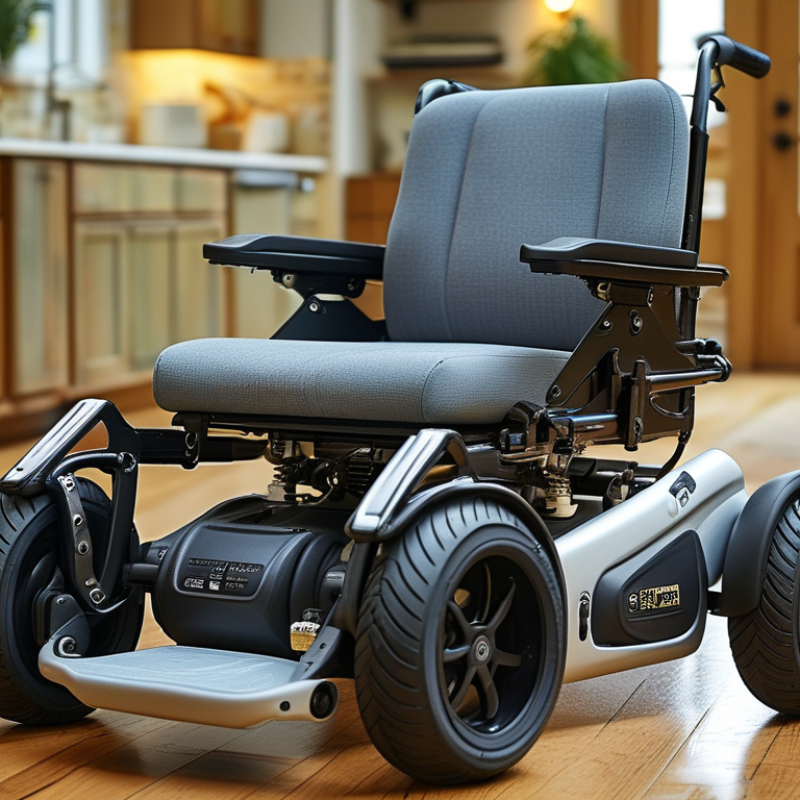
Choosing a power wheelchair starts with observing your real day, not only reading specifications. Can you move safely through doorways, hallways, and bathroom entrances? Measure these spaces carefully. A few centimeters can change everything.
Consider how you transfer, reach shelves, and control the chair when tired. Someone with limited hand strength may need alternative controls or adjustable sensitivity. Good seating support should reduce pressure and help maintain a stable posture. A qualified occupational therapist or mobility specialist can assess these needs more accurately than online comparisons.
Think about your usual surfaces. Carpets, uneven sidewalks, ramps, and wet outdoor paths demand different performance. Check turning space in your kitchen and charging access near your parking area. If you travel by car or public transport, confirm the chair’s weight, dimensions, and safe transport requirements. Battery range also depends on hills, temperature, user weight, and frequent stops.
Daily details matter most. Very much. A chair may look suitable in a showroom but feel awkward beside your bed. Try it in realistic spaces whenever possible. I have seen people focus on speed and later regret ignoring seat height or control placement. That mistake is understandable, but preventable. Write down your routine for one ordinary week, including difficult moments, before making a final choice.
Choosing a power wheelchair starts with matching the chair to daily environments, not showroom appearance. The WHO and UNICEF Global Report on Assistive Technology (2022) estimates that 2.5 billion people need assistive products worldwide. That figure may reach 3.5 billion by 2050.
Tip 1: Compare rear-, mid-, and front-wheel drive. Rear-wheel models offer outdoor stability, while mid-wheel designs turn tightly indoors. Front-wheel systems may handle some obstacles better.
Tip 2: Check whether a folding travel model sacrifices suspension, seat support, or battery range. It often does.
Tip 3: Measure doorways, lift floors, and turning spaces with a tape measure.
Tip 4: Match seat width, depth, and cushion type through professional assessment.
Tip 5: Review tilt, recline, elevating leg rests, and seat elevation. These features affect posture, transfers, and skin protection.
Tip 6: Confirm battery type, charging time, and realistic range. Hills, cold weather, heavy loads, and frequent stops can reduce quoted distances.
Tip 7: Test joystick sensitivity and alternative controls with an occupational therapist. Small errors matter.
Tip 8: Ask for evidence of ISO 7176 testing, especially for braking and stability.
Tip 9: Examine repair access, warranty terms, and local technician coverage.
Tip 10: Trial the chair on your actual route, including ramps, thresholds, and uneven pavement.
The WHO and UNICEF report supports user-centred assessment and follow-up.
My caution is simple: powerful motors can feel reassuring, yet excessive speed may reduce control indoors.
More features are not always better. Reassess comfort after several weeks.
10 Tips for Choosing the Best Power Wheelchairs
Evaluating Comfort, Support, Size, and Maneuverability
Comfort begins with a stable sitting position, not soft padding alone. Sit for at least twenty minutes during a supervised trial. Check whether the seat supports your hips without squeezing them. Your knees should bend naturally, with both feet resting securely. Pressure near the tailbone deserves attention. It may become painful later. Adjustable back support can reduce fatigue during longer trips. A seating specialist can assess posture, skin protection, and pressure distribution. Do not rely only on showroom impressions.
Measure doorways, elevator entrances, tables, and storage areas before choosing a chair. Compare the wheelchair’s full width with your narrowest passage. Seat width and depth affect both comfort and control. A seat that seems spacious may make reaching the joystick difficult. Armrests, footplates, and head support should adjust without complicated tools. Small details matter. I once underestimated turning space around a kitchen island; the chair technically fit, but daily movement felt awkward.
Maneuverability depends on turning radius, drive response, and surface conditions. Test the chair on carpet, ramps, uneven pavement, and tight corners. Keep the control system within easy reach, with settings that match your hand strength. Ask a qualified therapist or mobility professional to observe transfers and driving. Their advice is more reliable than advertisements. A home trial can reveal problems that measurements miss. If comfort, support, size, and control do not work together, reconsider the choice.
| Tip | Evaluation Area | What to Evaluate | Practical Guidance | Why It Matters |
|---|---|---|---|---|
| 1 | Seat Width and Depth | Measure the user’s hip width while seated and the distance from the back of the pelvis to the back of the knee. The seat should not squeeze the hips or leave excessive unused space. Fit | A commonly used starting point is approximately 2.5–5 cm (1–2 in) of total clearance across the hips. Seat depth should support most of the thigh without pressing behind the knees. | Correct dimensions help reduce pressure, improve posture, and make transfers easier. |
| 2 | Cushion and Pressure Management | Check the cushion material, contour, firmness, ventilation, and ability to distribute weight. Consider pressure-relieving needs identified by a qualified clinician. Comfort | Choose a cushion that maintains pelvic stability while allowing regular weight shifts. A pressure-redistributing cushion may be important for users who sit for long periods or have reduced sensation. | Proper pressure management can improve comfort and help lower the risk of skin irritation and pressure injuries. |
| 3 | Back Support and Posture | Evaluate back height, lumbar support, lateral support, head support, and the range of seat-back adjustment. The user should be able to maintain a stable, neutral posture. Support | The back support should match the user’s trunk needs without restricting shoulder movement. Adjustable recline or tilt can be useful when recommended for posture, comfort, or pressure relief. | Adequate trunk support may reduce fatigue and improve control of the chair and upper limbs. |
| 4 | Legrests and Footplates | Inspect footplate height, angle, length, heel support, swing-away function, and legrest clearance. Feet should remain supported without forcing the knees too high or too low. Positioning | Footplates should be adjusted so the thighs are supported and the feet do not drag. Elevating legrests may be appropriate for specific swelling, injury, or positioning requirements. | Stable lower-limb support improves comfort, posture, and transfer safety. |
| 5 | Overall Width and Home Access | Measure doorways, hallways, elevators, bathroom entrances, table clearances, and storage areas. Include the chair’s widest parts, such as armrests, joystick, and legrests. Size | Compare the chair’s published overall width with the narrowest route at home. Allow extra clearance for steering, hand placement, and uneven walls; do not rely only on a doorway’s nominal width. | A chair that cannot pass through essential spaces may be impractical even if its seating system is comfortable. |
| 6 | Turning Radius and Maneuverability | Test forward, reverse, pivot, and tight-turn performance in kitchens, bathrooms, corridors, and crowded areas. Consider the drive-wheel position and control sensitivity. Control | A smaller turning radius is generally helpful indoors, while drive-wheel configuration affects how the chair behaves during turns. Request a hands-on trial whenever possible. | Better maneuverability can reduce collisions, improve independence, and simplify navigation in confined spaces. |
| 7 | Indoor and Outdoor Performance | Identify the surfaces and slopes the user will encounter, including thresholds, carpeting, gravel, ramps, and wet pavement. Check ground clearance and stability. Terrain | Select a configuration suited to the intended environment. Larger drive wheels, suitable suspension, and appropriate ground clearance can improve outdoor handling, but may increase size and weight. | Matching the chair to the environment improves safety, traction, and ride comfort. |
| 8 | Battery Range and Charging | Estimate daily travel, time spent away from home, slope use, occupant weight, temperature, and charging access. Review the battery type, charger, charging time, and replacement requirements. Reliability | Use the manufacturer’s tested range only as a reference because real-world range varies with load, terrain, speed, and battery condition. Leave a practical reserve rather than planning to use the full stated range. | Adequate range reduces the risk of unexpected power loss and supports dependable daily travel. |
| 9 | Controls and User Ability | Assess joystick location, control force, programming options, visibility of indicators, attendant controls, and alternative input methods. Test operation with the user’s available hand, arm, or head movement. Usability | The control system should allow smooth starts, stops, turns, and speed changes. Alternative controls may be appropriate when hand strength, reach, or coordination is limited. | A well-matched control system improves independence and reduces accidental movement. |
| 10 | Transport, Maintenance, and Safety | Check total weight, whether components can be removed, tie-down compatibility, electromagnetic brake behavior, service access, and safety features. Confirm that the chair suits the user’s transport routine. Practicality | Verify transport requirements before purchase. Use approved occupant restraints and wheelchair tie-down systems when traveling in a vehicle. Ask about battery care, tire maintenance, inspections, and repair support. | Transport compatibility and routine maintenance affect long-term safety, availability, and ownership convenience. |
10 Tips for Choosing the Best Power Wheelchairs
Battery performance deserves more than a mileage claim. ISO 7176-4 measures energy consumption under defined test conditions, not every real journey. Ask how temperature, user weight, slopes, and outdoor surfaces affect range. A practical check is simple: drive around a familiar block, including a ramp, then review the battery meter. Recharge time matters too. A chair that needs overnight charging may not suit daily work or travel. The WHO Global Report on Assistive Technology estimates that more than 2.5 billion people need assistive products worldwide, yet access remains uneven. Professional assessment can prevent an expensive mismatch.
Controls should respond smoothly, even with limited hand strength or tremors. ISO 7176-14 covers power and control systems, but testing in a showroom can feel misleading. Try stopping beside a table. Try reversing slowly. A qualified clinician can assess posture, reach, vision, and fatigue. Safety includes braking, anti-tip support, lights, charging protection, and secure seating. ISO 7176-19 addresses wheelchair use as a seat in motor vehicles; ordinary driving performance does not guarantee transport safety.
Reliability appears in small details. Inspect connectors, caster movement, frame joints, and battery access. Ask for documented service intervals, parts availability, and realistic repair times. Keep a written fault log after purchase. I would not trust a perfect reliability promise. Real users face rain, uneven pavements, and rushed charging. The U.S. Department of Veterans Affairs highlights preventive maintenance as part of safe mobility-device use. A strong choice leaves room for honest limitations.
Use this product-independent weighting guide to compare power wheelchairs. Battery performance, controls, safety, and reliability receive the greatest emphasis because they directly affect daily mobility, independence, and user protection.
How to use this chart: Assign each wheelchair a score from 1 to 5 for every category, then multiply the score by the suggested weight. Always confirm battery range, control compatibility, safety features, warranty terms, and service support with a qualified supplier or clinician.
Choosing a power wheelchair starts with the full cost, not the showroom price. WHO and UNICEF reported in 2022 that over 2.5 billion people need assistive products, while nearly 1 billion lack access. This gap makes professional assessment important. Ask a licensed occupational therapist or seating specialist to measure posture, reach, pressure risk, and home access. A cheaper chair may become expensive if it cannot fit through a 28-inch doorway or climb your usual ramp.
Maintenance deserves equal attention. Request written prices for batteries, tires, chargers, controllers, and labor. Battery life depends on weight, terrain, temperature, and charging habits. Keep a service log. Small faults can become safety problems. Customization should match daily tasks, not fashion. Consider tilt, recline, elevating leg rests, pressure-relieving cushions, lighting, and joystick placement. RESNA’s professional standards emphasize individualized wheeled-mobility assessment, yet real-world fitting is still imperfect. I would not trust a single demonstration. Test the chair on carpet, uneven pavement, tight turns, and a kitchen threshold. Ask how repairs are handled when the chair is unusable. In the United States, coverage decisions also depend on medical documentation and equipment classification, so confirm requirements before paying. My own caution is simple: comfort today can hide maintenance costs tomorrow.
Observe one ordinary week, including difficult moments. Measure doorways, hallways, bathroom entrances, and elevator spaces. Note transfers, reaching shelves, and controlling the chair when tired. Showroom comfort can mislead.
Compare the chair’s full width with your narrowest passage. Measure turning space near beds, tables, kitchen islands, and storage areas. Check charging access beside the usual parking place. Measure twice.
Sit in the chair for at least twenty minutes during a supervised trial. Your hips should feel supported without pressure. Both feet should rest securely. Watch for tailbone pressure, awkward knees, or unstable posture.
Try carpet, ramps, uneven sidewalks, wet paths, and tight corners. Outdoor performance may change on hills or rough ground. A home trial can reveal problems that indoor testing misses. Very much.
Treat mileage figures as estimates from controlled conditions. Temperature, hills, user weight, surfaces, and frequent stops reduce practical range. Drive around a familiar block with a ramp. Check recharge time too.
Controls should respond smoothly and remain easy to reach. Test sensitivity, slow reversing, stopping beside a table, and driving while tired. Adjustable controls may improve safety. Professional assessment is wiser than guessing.
Check braking, anti-tip support, lights, charging protection, and secure seating. Transport safety requires separate verification. A chair suitable for daily driving may not be safe inside a vehicle. Small details matter.
Inspect connectors, caster movement, frame joints, and battery access. Ask about service intervals, replacement parts, and realistic repair times. Keep a written fault log after purchase. Perfect promises deserve caution.
Yes. An occupational therapist or mobility specialist can assess posture, transfers, reach, vision, fatigue, and pressure risks. Their advice may expose an uncomfortable mistake. Online comparisons cannot show every home problem.
Choosing the right Power Wheelchairs begins with understanding the user’s mobility needs, daily routines, home layout, and outdoor environment. Consider whether the chair will be used mainly indoors, outdoors, or in both settings, and compare suitable types based on portability, drive systems, terrain performance, and essential features. Seat comfort, posture support, overall size, weight capacity, turning radius, and ease of maneuverability are also important for safe and practical use.
Before making a decision, evaluate battery range, charging requirements, control options, braking systems, stability, and dependable construction. Review the total cost, including accessories, servicing, replacement parts, and long-term maintenance. Customization may improve comfort and usability, while professional guidance can help match the chair to medical, lifestyle, and environmental requirements. A careful comparison of these factors will support a confident choice that promotes independence, safety, and everyday convenience.