Choosing the right 4-Wheel Mobility Scooters requires more than comparing prices and battery ranges. Global buyers must match the scooter to daily routines, local terrain, climate, and available support. A model used on smooth sidewalks may struggle on gravel, steep driveways, or wet public paths. Measure doorways, lift dimensions, and storage spaces before ordering. A few centimeters can determine whether the scooter fits your home.
Practical evaluation should begin with stability, turning space, seat comfort, and control layout. Four wheels usually provide confident balance, especially for users who travel across uneven surfaces. However, a wider frame may reduce maneuverability in narrow corridors. Check the advertised range carefully. Hills, rider weight, cold temperatures, tire pressure, and frequent stops can reduce real-world distance. That difference matters.
Look for clear technical specifications, recognized safety information, warranty terms, and accessible replacement parts. Ask the supplier who handles repairs in your country. Confirm charging compatibility, delivery conditions, and after-sales communication before payment. Requirements differ between markets, so buyers should verify current local rules with official transport or accessibility authorities. Manufacturer claims deserve careful comparison.
No checklist is perfect.
A common mistake is focusing on maximum speed while ignoring braking feel, transfer height, and everyday comfort. These details shape confidence after the first week. The best choice may not be the most powerful scooter. It is the one that fits the user, environment, budget, and support network reliably. Even experienced buyers should revisit their assumptions. Global purchasing adds uncertainty, but careful questions can turn that uncertainty into a manageable decision.
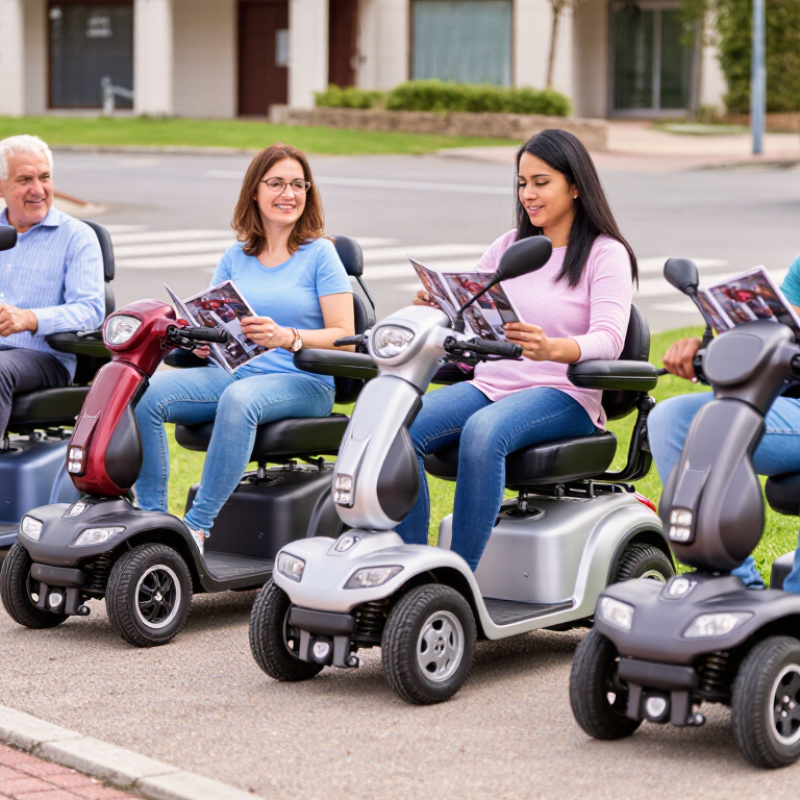
Understanding the Main Types of 4 Wheel Mobility Scooters
How to Choose 4 Wheel Mobility Scooters for Global Buyers
Understanding the Main Types of 4 Wheel Mobility Scooters
Four-wheel mobility scooters usually fall into compact, full-size, heavy-duty, and all-terrain categories. Each type serves a different daily routine. Compact models suit apartment corridors, shopping aisles, and short outdoor trips. Their smaller frames improve turning, but limited batteries may disappoint on longer journeys. Check folded or dismantled dimensions carefully. A lift or vehicle boot must handle the heaviest section.
Full-size scooters provide wider seats, stronger suspension, and longer travel ranges. They work well for daily errands, paved paths, and uneven sidewalks. Heavy-duty models support higher user weights and often include reinforced frames. However, they need more storage space and may feel awkward indoors.
All-terrain scooters use larger pneumatic or solid tires. They handle grass, gravel, and sloped paths better, but their width can create access problems.
I have seen buyers focus too heavily on advertised range. Real distance changes with rider weight, temperature, hills, tire pressure, and battery age. That mistake is easy to make. Ask for tested range conditions, charging time, and battery replacement details. Local service access matters just as much.
Confirm charger compatibility, user-weight ratings, braking performance, and required safety certifications in the destination country. A comfortable test ride can reveal poor legroom or stiff controls. Do not ignore small discomforts. They often become daily problems.
Assessing User Needs, Terrain, and Travel Requirements
Choosing a four-wheel mobility scooter begins with the user, not the catalogue. The WHO and UNICEF Global Report on Assistive Technology estimates that more than 2.5 billion people need assistive products worldwide. That need is expected to exceed 3.5 billion by 2050. Buyers should assess walking endurance, balance, transfer ability, seat support, and daily distance. A short indoor route may require a compact model. Outdoor users may need stronger suspension, larger tires, and better ground clearance.
Terrain changes the decision quickly. Smooth shopping floors rarely reveal problems. Uneven pavements, wet ramps, gravel, and steep driveways do. Compare the scooter’s safe working limit, turning radius, braking performance, and stated gradient capacity. Do not rely on speed alone. A higher speed can reduce confidence on narrow paths. Weight capacity should include clothing, bags, and medical equipment. Real conditions are messier than showroom tests. Range figures also vary with rider weight, temperature, hills, tire pressure, and battery age.
Travel adds another layer. The International Air Transport Association requires battery information and advance airline coordination for many mobility devices, especially lithium-powered models. Check folded dimensions, total weight, removable battery details, and lifting points before purchase. Measure the vehicle trunk. Then measure it again. A scooter that fits at home may fail at a hotel doorway or ferry ramp. Global buyers should also confirm local charging voltage, after-sales servicing, spare-part access, and import requirements. I would not treat one specification sheet as final evidence; a supervised trial on the user’s actual routes is more reliable.
Comparing Key Features, Performance, and Safety Systems
Choosing a four-wheel mobility scooter requires more than checking its advertised range.
Performance depends on rider weight, terrain, temperature, and battery age. A model claiming 30 kilometers may travel less on wet slopes or rough pavement.
Test the scooter with a realistic load. Check its turning radius in a narrow hallway and its ground clearance near a curb. Larger pneumatic tires can improve comfort, but they may need regular pressure checks.
Solid tires resist punctures, although they can feel harsher on uneven surfaces. Seat adjustment, handlebar reach, and suspension also affect daily control.
Safety systems deserve close attention. Electromagnetic brakes should stop the scooter smoothly when the control is released. Anti-tip wheels, bright lighting, reflectors, a horn, and a clear battery indicator add practical protection. A lap belt can help, but it must fit comfortably and should not replace careful driving.
Speed settings are useful in crowded areas. Some controls are still confusing, especially for users with limited hand strength. This is easy to overlook.
Global buyers should verify local road-use rules, charging requirements, and electrical compatibility before purchase. Ask for the user manual, warranty terms, service contacts, and replacement-part availability. Independent test documents are more dependable than sales claims alone. Range figures still disappoint me when tested only on flat, dry ground. A short supervised trial on the buyer’s usual route often reveals more than a specification sheet.
Checking Regulations, Portability, and International Compatibility
How to Choose 4 Wheel Mobility Scooters for Global Buyers
Choosing a four-wheel mobility scooter begins with local regulations, not appearance.
Rules may classify scooters as medical devices, mobility aids, or vehicles. The classification can affect registration, lighting, speed, and road access. Check official transport, customs, and healthcare guidance before placing an order. Requirements differ between countries and sometimes between cities.
Portability matters during daily use.
Measure the folded scooter, vehicle boot, doorway, and lift carefully. A model may look compact online but remain difficult to lift. Removable batteries can help, but airlines and shipping companies often require specific battery documents. Ask about watt-hours, terminals, packaging, and approval procedures.
I once trusted a product diagram and underestimated the turning space. That mistake would have been costly for a smaller apartment.
International compatibility includes more than the plug.
Confirm charger voltage, frequency, replacement battery availability, and service support in the destination country. Check whether the seat, controls, and tiller suit the user’s reach and posture.
Test stability on uneven pavement, gentle slopes, and wet surfaces where possible. Four wheels usually improve balance, but they can reduce maneuverability in narrow corridors. A written checklist is useful, though mine still missed elevator dimensions once.
Keep copies of manuals, invoices, battery specifications, and safety certificates. Customs officers or carriers may request them. User needs can change after purchase, so leave room for real-world adjustment.
Evaluating Quality, Support, Warranty, and Total Cost
How to Choose 4 Wheel Mobility Scooters for Global Buyers
Quality should be judged beyond appearance. Check the frame joints, welds, tire grip, turning stability, and seat adjustment. A reliable scooter should move smoothly on ramps, uneven pavement, and narrow indoor floors. Ask for load testing details, battery specifications, and independent safety documentation. Small rattles can reveal poor assembly. Do not ignore them.
Tips: Request a video of the scooter operating on a real surface. Confirm replacement parts, battery availability, and service response times in your country. A nearby technician can matter more than a lower purchase price. Clarify whether support includes troubleshooting, maintenance guidance, and shipping assistance. Written answers are safer than promises made during a sales call.
Warranty terms deserve careful reading. Check coverage for the motor, controller, battery, charger, frame, and electronics separately. Some warranties exclude water damage, heavy use, or international shipping. That detail can create unexpected costs. Calculate the full ownership cost, including freight, taxes, insurance, maintenance, replacement batteries, and storage. My first estimate might look attractive, but it can fail after adding battery replacement and local service fees. Compare practical support, not only the advertised warranty period.
FAQS
Compact models suit apartments, shopping aisles, and short trips. Full-size models offer wider seats and stronger suspension. Heavy-duty models support higher loads. All-terrain models handle grass, gravel, and sloped paths better.
Measure hallways, doorways, lifts, and turning spaces. Compact scooters usually maneuver more easily indoors. Check the folded or dismantled dimensions carefully. Small details matter.
Ask how the range was tested. Rider weight, hills, temperature, tire pressure, and battery age can reduce distance. A claimed 30-kilometer range may be shorter outdoors. Range claims need context.
Smooth floors need less ground clearance and suspension. Gravel, wet ramps, and uneven pavements require stronger tires and suspension. Check the turning radius, braking performance, and stated gradient capacity. Test the actual route.
Include the user, clothing, shopping bags, and medical equipment. Do not use body weight alone. A higher capacity can improve stability and durability. Real travel is rarely empty-handed.
Look for smooth electromagnetic braking, anti-tip wheels, lights, reflectors, and a horn. A clear battery indicator is useful. Speed settings help in crowded areas. Controls should feel simple and firm.
Check airline or transport rules before booking. Confirm battery details, total weight, folded dimensions, and lifting points. Measure the vehicle trunk and destination doorways. Measure twice.
Confirm charging voltage, battery compatibility, local safety requirements, and service access. Ask about warranty terms, manuals, and replacement parts. A nearby service option may matter more than a longer advertised range.
Yes, when possible. Test legroom, handlebar reach, controls, turning, braking, and comfort. Use realistic clothing or bags during the test. A showroom floor can hide everyday problems.
Conclusion
Choosing the right 4-Wheel Mobility Scooters requires more than comparing appearance or price. Global buyers should first understand the main categories, such as compact travel models, standard indoor-outdoor scooters, and heavy-duty options. The best choice depends on the user’s mobility needs, body size, daily distance, terrain, storage conditions, and travel plans. Buyers should compare performance factors including motor power, battery range, charging time, ground clearance, turning radius, seating comfort, suspension, lighting, braking, and stability systems.
International compatibility is also essential. Check whether the scooter can be transported conveniently, whether its battery and charger meet destination requirements, and whether local regulations affect road or public-space use. Finally, evaluate build quality, after-sales support, warranty coverage, replacement parts, and the total cost of ownership rather than focusing only on the initial purchase price. A careful comparison of safety, convenience, durability, and service support will help global users select a reliable scooter suited to their lifestyle and environment.