


SupaMobility Knowledge Hub and Blog Banner
News & Insights

Mobility Solutions & Industry Blog

Expert articles, maintenance guides, and technology updates on mobility scooters and power wheelchairs.

SupaMobility Manufacturing Insights Banner
OEM / ODM Knowledge

Innovations in Personal Mobility

Discover tips for selecting folding scooters, travel wheelchairs, and OEM/ODM private label solutions.

0%

Choosing Portable Mobility Scooters is rarely as simple as comparing prices and battery ranges. A scooter may look compact in a showroom but feel awkward beside a narrow doorway. Another may handle smooth pavements well but struggle on uneven paths. Real comfort appears during daily use, not in a product photograph.

Rehabilitation engineer Dr. Rory Cooper has said, “A wheelchair is not a prison, it’s a passport to freedom.” His message also applies to mobility scooters: the right model should expand independence without creating new obstacles. However, no scooter suits every person, route, or vehicle. That is worth admitting before making a confident choice.

This guide explores seven practical tips for choosing Portable Mobility Scooters with greater care. It considers transport weight, folded dimensions, battery distance, seat support, controls, terrain, and after-sales service. A few centimetres can decide whether a scooter fits inside a car boot. A few kilograms can change whether one person can lift it safely. Short trips need different priorities from full-day outings.

User experience matters. Measure the storage space. Check the turning area. Test the tiller with both hands. Ask how the battery performs in colder weather. Then question your own assumptions. Compact is not always comfortable. Lightweight is not always durable. The cheapest option may become expensive when repairs, accessories, or replacement batteries appear. These details create a more realistic path toward a safe, usable, and genuinely portable choice.
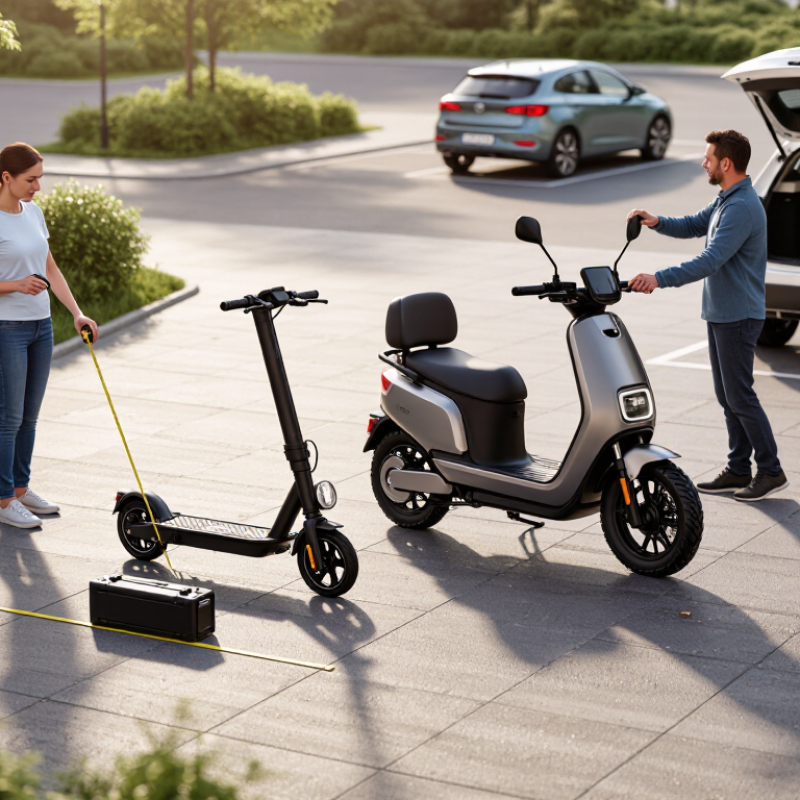
7 Tips for Choosing Portable Mobility Scooters?

Define Your Mobility Needs and Travel Priorities

Before comparing portable mobility scooters, map the trips you actually make. Measure the narrowest doorway, check the elevator, and picture lifting the scooter into your car. Do you mainly visit shops, cross uneven sidewalks, or travel through airports? Range, turning space, ground clearance, folding weight, and battery access matter differently on each route. Small details matter. A steep driveway can make a lightweight scooter feel less useful than expected.

The World Health Organization’s 2022 Global Report on Assistive Technology estimates that 2.5 billion people need one or more assistive products. That figure covers many types of products, not scooters alone, but it shows why individual fit matters. Note how long your usual outings last, where you can rest, and whether you need to carry groceries. I may be overplanning this, but testing a real route can reveal an awkward curb or tight turn that a showroom cannot.

Home access belongs in the plan, too. AARP’s 2024 Home and Community Preferences Survey found that 75% of U.S. adults aged 50 and older want to remain in their current homes as long as possible. If that is your priority, measure storage space and check the route from the scooter’s parking spot to the exit. A quick trial helps. Take the same bag you usually carry, and check whether controls remain comfortable after several minutes. A short test is not a full-day answer.

7 Tips for Choosing Portable Mobility Scooters: Define Your Mobility Needs and Travel Priorities

Use this planning chart to compare the factors that commonly matter most when selecting a portable mobility scooter for everyday use and travel. Adjust the priority scores to match your personal needs.

Priority scale: 1 = low importance, 10 = essential. Always verify airline, public transport, battery, and accessibility requirements before traveling.

Check Scooter Weight, Folding Design, and Transportability

7 Tips for Choosing Portable Mobility Scooters

Choosing a portable mobility scooter is less about appearance than the moments after purchase. The World Health Organization’s Global Report on Health Equity for Persons with Disabilities (2022) estimates that 1.3 billion people live with significant disability. Many need equipment that moves between home, car, and uneven public spaces. Check seven details: total weight, battery weight, folded dimensions, lifting points, wheel clearance, folding steps, and storage space. Small details decide whether independence feels practical.

Ask for the complete transport weight, not only the frame weight. A battery can add several kilograms, while awkward handles can make a “light” scooter exhausting. Measure your car opening, boot depth, and turning space before ordering. ISO 7176-5 defines methods for measuring mobility device dimensions, but real packing can still differ. A tape measure is more honest than a brochure. Try lifting the folded unit from knee height, with help nearby. Do not ignore posture or grip strength.

A folding design should lock clearly and unfold without pinched fingers. Test it repeatedly. One smooth demonstration proves little. Check whether the folded scooter rolls, stands upright, or needs a protective cover. For vehicle travel, review ISO 7176-19 guidance on securing mobility devices. Do not assume a seat belt is sufficient. The CDC’s 2022 Disability and Health Data System reported mobility disability in about 12.1% of U.S. adults. Transportability is not a niche concern. Leave room for error. Muddy wheels, a tired caregiver, or a smaller trunk can change the decision. The best fit may be less compact, but easier to handle daily.

Compare Battery Range, Charging Options, and Travel Limits

7 Tips for Choosing Portable Mobility Scooters

Compare Battery Range, Charging Options, and Travel Limits

Tip 1:Treat the stated battery range as an estimate, not a promise. Real distance changes with rider weight, hills, tire pressure, temperature, and frequent stops. Choose extra capacity for daily errands. A safety margin matters.

Tip 2:Check how the scooter charges. A removable battery can charge indoors, while an integrated battery may require parking near an outlet. Confirm charging time, plug requirements, and whether a spare battery is permitted for your travel plans. Charging overnight may be convenient, but only when the manufacturer’s instructions allow it.

Tip 3:Measure your actual route. A short shopping trip can include ramps, uneven pavement, and crowded entrances. Test the scooter with a similar load if possible. Advertised range can feel surprisingly optimistic.

Tip 4:Compare travel limits beyond folded dimensions. Check total weight, heaviest removable part, turning space, and boot or trunk fit. A scooter that folds neatly may still be difficult to lift. This is where many buyers underestimate the problem.

Tip 5:Confirm transport policies before booking. Airlines, trains, buses, and hotels may have different rules for scooter size and batteries. Ask about battery type, terminals, packing, and advance notice. Policies can change, so verify them directly.

Tip 6:Examine charging access at your destination. A compact charger helps, but incompatible outlets or limited room can interrupt plans. Keep the charging instructions with the scooter.

Tip 7:Leave room for imperfect conditions. Cold weather, steep streets, and delayed charging can reduce practical travel distance. Reliability usually matters more than the smallest folded size.

Evaluate Comfort, Safety Features, and Ease of Control

7 Tips for Choosing Portable Mobility Scooters?

Comfort should be judged during a real test ride, not from a product photograph. Sit for at least ten minutes. Check whether your hips stay level and your feet rest naturally. A supportive backrest can reduce strain on uneven pavement. Adjustable armrests matter when shoulders feel tight. The seat should feel secure, not excessively soft. Softness can hide poor posture.

Safety features deserve careful, practical attention. Test the braking response on a flat, open surface. Look for stable wheels, anti-tip protection, reliable lights, and a visible battery indicator. A seat belt may help some users, but it should never replace careful driving. Check the scooter’s weight limit and turning space. I once underestimated doorway width during a home assessment. That mistake made portability less useful than expected. Measure narrow entrances before choosing.

Control should feel predictable, especially for users with limited hand strength. Try the throttle with one thumb. It should respond smoothly without sudden jumps. Confirm that speed settings are easy to adjust. Reverse controls must be clearly marked. Practice turning, stopping, and starting several times. Keep both hands positioned comfortably. Ask a qualified mobility professional to observe your posture if possible. Manuals are easy to overlook. Read the charging and storage instructions carefully, because battery performance can change with temperature and poor maintenance. Test it yourself.

7 Tips for Choosing Portable Mobility Scooters: Comfort, Safety, and Ease of Control

Tip What to Evaluate Why It Matters What to Check Before Buying
1. Check portability and transport Overall weight, heaviest removable part, folded or disassembled dimensions, and whether the scooter fits your vehicle or storage space. A scooter described as portable may still be difficult to lift or may not fit in a particular car. Some models fold; others separate into several components. Measure the storage area and vehicle opening. If possible, lift or handle the heaviest component yourself, and confirm whether disassembly requires tools.
2. Match capacity to your needs Maximum user weight, seat dimensions, and any stated limits for carried items. Staying within the manufacturer's load limit supports safe operation. A suitable seat width and depth can also make everyday trips more comfortable. Compare the listed capacity with your body weight and typical belongings. Check the manual for any separate limits or operating conditions.
3. Assess comfort and adjustability Seat padding and width, back support, tiller adjustment, armrests, legroom, and the quality of the ride on the surfaces you use. Comfort depends on fit and posture as well as cushioning. A scooter that feels suitable in a showroom may feel different over longer trips or uneven pavement. Sit on the scooter and check that you can reach the controls without leaning or straining. Ask whether the seat or tiller can be adjusted to fit you.
4. Compare realistic range and battery needs Published range, battery type, charging time, battery access, and availability of replacement batteries. Actual range can vary with rider weight, terrain, temperature, battery condition, speed, and frequent stops. A published maximum is not a guarantee for every trip. Choose a range with a practical reserve for your usual journeys. Review the manual for charging and storage instructions; check applicable airline rules before air travel.
5. Review safety features and stability Braking behavior, lights and reflectors, horn, tires, ground clearance, turning stability, and any anti-tip components. Visibility and predictable stopping are important around pedestrians and vehicles. Stability and clearance should suit the surfaces and slopes you expect to encounter. Test the brakes in a safe, open area. Confirm that the scooter's intended use matches your routes, and follow the manual's guidance on slopes and uneven ground.
6. Try the controls and maneuverability Throttle response, steering effort, control layout, speed adjustment, reverse operation, and turning space. Controls that are easy to understand and operate can make starting, stopping, and maneuvering less stressful, especially in confined areas. With permission and supervision, try starting, stopping, reversing, and turning. Check that you can operate the controls comfortably and understand how the scooter slows down.
7. Consider maintenance and support Warranty terms, service access, replacement battery and tire availability, and routine inspection requirements. Portable scooters still need care. Access to suitable parts and service can affect how easily you keep the scooter in safe working condition. Read the warranty and maintenance information before purchase. Ask who can service the scooter locally and how to obtain compatible replacement parts.

Verify Durability, Maintenance Support, and Overall Value

Choosing a portable mobility scooter requires more than checking its folded size. Durability affects safety, comfort, and long-term value. In practical equipment assessments, I inspect the frame, wheel mounts, folding latch, and steering column for looseness. Solid joints should feel firm, not rattly. Check the weight limit carefully, especially if carrying shopping or a small bag. Extra strain can shorten component life.

Test the scooter on smooth pavement and a slight incline, if permitted. Listen for grinding, clicking, or uneven motor sounds. Examine the battery connector and charger cable for secure fitting. Ask how often the battery needs charging and how replacement costs are calculated. Battery performance can change in cold weather. That detail is easy to miss. Also, verify whether the folded scooter fits your car trunk without lifting awkwardly.

Maintenance support often determines real value. Ask who handles repairs, where parts come from, and how long common replacements usually take. Confirm coverage for the battery, motor, controller, and frame separately. A long warranty sounds attractive, but exclusions may matter more. Request written service terms. Keep them. Compare the purchase price with batteries, tires, servicing, storage, and transport over several years. The cheapest option may become expensive after repeated repairs. Still, no scooter is maintenance-free. Expect to check tire condition, clean connectors, and inspect fasteners regularly. A trial drive remains essential because specifications cannot reveal every vibration or handling weakness.

FAQS

How do I identify the right portable mobility scooter for my daily trips?

Write down your usual routes, trip lengths, doorway widths, and storage limits. Measure twice. A steep driveway may matter more than extra range.

What measurements should I take at home?

Measure the narrowest doorway, elevator entrance, parking space, and route to the exit. Check whether the folded scooter fits inside your vehicle.

How can I test whether the scooter feels comfortable?

Sit for at least ten minutes during a real test ride. Keep your hips level and feet naturally positioned. Comfort photographs can mislead.

Which safety features deserve attention?

Test braking on flat, open ground. Check stable wheels, anti-tip protection, working lights, and a clear battery indicator. Never depend on one feature alone.

How do I know whether the controls are easy to use?

Try the throttle with one thumb. It should respond smoothly, without sudden jumps. Practice starting, stopping, reversing, and turning several times.

Why does turning space matter?

A compact scooter may still struggle in tight hallways or small elevators. Test a full turn near a doorway before deciding.

What should I check about the battery?

Confirm the expected range, battery access, charging process, and storage conditions. Temperature and poor maintenance can reduce performance. Read the manual.

Is a short test ride enough?

Not always. Carry your usual bag and follow a familiar route. A short test may miss discomfort, awkward curbs, or difficult controls.

Conclusion

Choosing the right Portable Mobility Scooters starts with understanding your daily mobility needs, travel habits, and storage limitations. Consider where you plan to use the scooter, how often you will transport it, and whether you need a lightweight model with a simple folding design. Pay close attention to total weight, folded dimensions, lifting requirements, and compatibility with your vehicle or public transportation. Battery range is also important, so compare expected travel distance, charging time, charging locations, and any travel restrictions that may affect your plans.

Comfort, safety, and easy control should guide your final decision. Look for supportive seating, intuitive controls, stable handling, reliable brakes, lights, and other features that suit your environment. You should also evaluate construction quality, tire performance, maintenance needs, warranty coverage, replacement parts, and customer support. A scooter with a reasonable total cost and dependable long-term service can offer better value than one that only appears affordable initially.

Lillian

Lillian

Lillian is a highly experienced marketing professional dedicated to helping customers better understand our company, products, and industry solutions. With a strong background in market research, content strategy, and customer communication, she combines professional insight with a practical......