

Choosing among the 2026 Top Hybrid Wheelchairs for Global Buyers requires more than comparing prices and appearance. Hybrid Wheelchairs combine manual propulsion, powered assistance, and adaptable seating features. They may support users across airports, clinics, city streets, and uneven home entrances. However, performance depends on body fit, battery range, terrain, maintenance access, and user strength. A lightweight frame can feel agile indoors, yet less stable on rough pavement. Buyers should inspect transfer height, braking response, cushion support, and joystick positioning before making a decision.
Dr. Rory Cooper, a leading wheelchair researcher and accessibility advocate, has often expressed this principle: “A wheelchair is a tool for independence.” That idea should guide every product evaluation. The best model is not automatically the fastest or most expensive. It should match the user’s daily route, physical abilities, climate, and local service network. Global buyers also need clear information about charging systems, replacement parts, warranty coverage, and transport safety. Regional standards may differ, so verified documentation matters.
This guide examines leading Hybrid Wheelchairs through practical and professional criteria. We consider comfort after several hours, not only showroom impressions. We examine turning space, folding effort, battery handling, and repair complexity. Some advertised benefits may appear impressive but remain difficult to measure. That deserves honest reflection. A ranking can simplify a deeply personal decision. Therefore, readers should treat these selections as informed starting points, then seek clinical guidance and hands-on trials. Real streets reveal more than brochures. Reliable mobility begins with evidence, careful fitting, and realistic expectations.
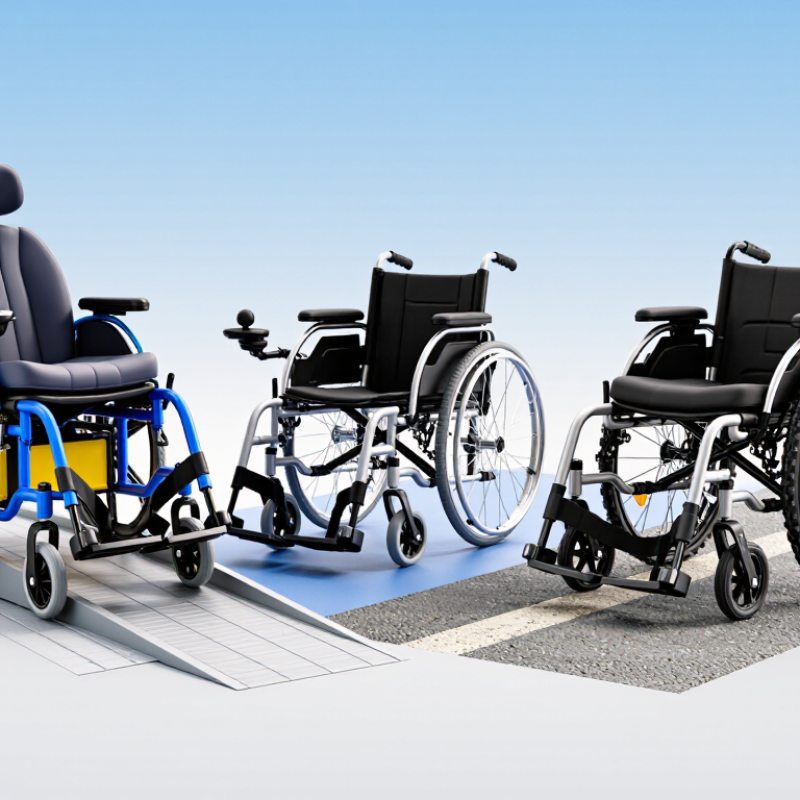
A hybrid wheelchair combines manual mobility with powered assistance or electronically adjustable support. In practice, users may push the hand rims, activate a motor, or switch between both modes. A battery alone does not define the category. Control flexibility does.
The WHO and UNICEF Global Report on Assistive Technology estimates that more than 2.5 billion people need assistive products worldwide. This figure may reach 3.5 billion by 2050. Those numbers expose a practical need for adaptable mobility. A hybrid wheelchair can support longer journeys, steep ramps, and indoor movement with less physical strain. Its frame should remain manageable when the battery is empty. That detail is often overlooked.
In the 2026 global market, credible evaluation should include ISO 7176 testing principles, braking performance, stability, range, charging time, and service access. A useful model might provide push-rim sensors, removable batteries, adjustable seating, and manual override controls. It should also fit narrow doors and uneven pavement. Real-world experience matters more than a polished specification sheet. The category remains somewhat unclear. Some products marketed as hybrid systems offer limited manual control or weak repair support. Buyers should check load ratings, terrain limits, battery replacement costs, and local technical assistance before purchase. Even strong designs can fail when maintenance networks are absent.
| Configuration | Primary Operating Mode | Typical User Profile | Indicative Driving Range | Typical Top Speed | Typical Product Weight | Typical User Weight Capacity | Portability and Storage | Terrain Suitability | Key Buying Advantage | Main Limitation |
|---|---|---|---|---|---|---|---|---|---|---|
| Manual Wheelchair with Power-Assist Wheels | Manual propulsion with powered assistance through electronically controlled wheels. | Active users who want to retain a familiar manual wheelchair setup while reducing arm strain. | Approx. 15–40 km (9–25 mi) |
Up to approximately 10 km/h (6.2 mph) |
Approximately 18–30 kg (40–66 lb), depending on chair and battery |
Approximately 100–150 kg (220–330 lb) |
Often removable or detachable; folding depends on the base wheelchair and wheel design. | Best on paved roads, indoor floors, ramps, and moderate outdoor paths. | Strong balance between manual control and powered assistance. | Wheel and battery weight may affect lifting, vehicle loading, and manual maneuverability. |
| Manual Wheelchair with Attachable Power Unit | Manual wheelchair with a front, rear, or under-seat powered drive module. | Users who need occasional powered travel but still require a conventional manual chair for transport or indoor use. | Approx. 15–50 km (9–31 mi) |
Approximately 6–15 km/h (3.7–9.3 mph) |
Approximately 20–38 kg (44–84 lb), including the powered module |
Approximately 100–150 kg (220–330 lb) |
Powered unit can often be removed; compatibility depends on frame geometry, caster position, and attachment system. | Suitable for paved surfaces, slopes, campuses, shopping areas, and selected compact trails. | Flexible conversion from manual to powered travel. | Added front or rear length can affect turning space, transport, and caster clearance. |
| Folding Hybrid Power Wheelchair | Joystick-controlled powered driving with a folding or collapsible frame. | Travelers, caregivers, and users who regularly move the wheelchair in cars, taxis, trains, or aircraft. | Approx. 15–30 km (9–19 mi) |
Approximately 6–8 km/h (3.7–5.0 mph) |
Approximately 20–32 kg (44–71 lb), battery configuration dependent |
Approximately 100–130 kg (220–287 lb) |
Designed for compact storage; removable batteries are useful where airline or transport rules apply. | Best for indoor use, smooth pavement, shopping centers, hotels, and short urban trips. | Convenient storage and comparatively easy vehicle transport. | Folding mechanisms can reduce frame rigidity, suspension performance, or maximum outdoor range. |
| Rigid-Frame Hybrid Power Wheelchair | Powered driving with a rigid manual-style frame and optional manual propulsion capability. | Daily users who prioritize seating stability, efficient handling, durability, and consistent performance. | Approx. 20–50 km (12–31 mi) |
Approximately 6–10 km/h (3.7–6.2 mph) |
Approximately 22–40 kg (49–88 lb) |
Approximately 100–150 kg (220–330 lb) |
Less compact than folding designs; transport may require a ramp, hoist, or accessible vehicle. | Suitable for frequent outdoor use, paved routes, ramps, and moderate uneven ground when equipped with appropriate casters. | Efficient handling and a stable platform for daily mobility. | Usually less convenient to lift and store than a folding hybrid wheelchair. |
| All-Terrain Hybrid Wheelchair | Powered drive combined with manual backup or manual maneuvering capability. | Users who travel on gravel, compact soil, park paths, cobblestones, or uneven outdoor surfaces. | Approx. 15–40 km (9–25 mi) |
Approximately 6–10 km/h (3.7–6.2 mph) |
Approximately 28–55 kg (62–121 lb) |
Approximately 120–180 kg (265–397 lb) |
Larger wheels, suspension, and reinforced frames generally reduce portability and increase storage requirements. | Best for firm outdoor terrain; performance varies significantly with tire type, ground clearance, and motor torque. | Improved outdoor stability and traction compared with compact indoor-focused designs. | Greater weight, wider dimensions, and higher energy consumption can limit transport convenience. |
| Standing or Seat-Elevating Hybrid Wheelchair | Powered mobility with an electrically adjustable seat elevation or standing function, plus manual backup features. | Users who need improved reach, eye-level interaction, pressure management, or supported standing as part of a prescribed mobility plan. | Approx. 10–30 km (6–19 mi) |
Approximately 5–8 km/h (3.1–5.0 mph) |
Approximately 35–70 kg (77–154 lb) |
Approximately 100–150 kg (220–330 lb) |
Usually requires a larger transport solution because of actuators, reinforced seating, and stability components. | Primarily intended for indoor and accessible paved environments; standing operation requires level, stable conditions. | Combines mobility with functional positioning and reach benefits. | Higher weight, cost, maintenance needs, and fitting requirements than basic hybrid designs. |
It combines manual movement with powered assistance. The user can push, steer, or use a motor. This can reduce effort on ramps and long corridors.
It may help users with limited upper-body strength, long travel routes, or frequent ramps. Needs differ widely. A professional fitting is wise.
An all-terrain design usually needs larger tires, a stable frame, and sealed electronics. It may feel bulky indoors. Test narrow doorways carefully.
Check seat width, turning radius, transfer height, total weight, and folded dimensions. Measure your doorway. A showroom floor can hide real problems.
Battery range affects daily reliability, especially on slopes and long routes. Ask about charging time and battery replacement. Advertised range may shrink in cold weather.
Request test reports covering braking, stability, impact resistance, fatigue, and slope performance. Confirm the tested user weight and battery setup. Labels alone are insufficient.
No. Standing functions may support eye-level communication, pressure management, and workplace access. They can also add weight and complicate transport. The extra feature may not fit every routine.
Confirm local technicians, spare parts, service intervals, and charging compatibility. Ask who repairs the chair after six months. Technology without follow-up care can disappoint.
Test ramps, loose gravel, wet paving, thresholds, corridors, and tight turns. Try loading it into a vehicle. Daily usability matters more than impressive specifications.
Hybrid Wheelchairs are becoming an important solution for global buyers seeking greater flexibility, independence, and mobility in 2026. Designed to combine manual and powered functions, these systems may also include standing support or all-terrain capabilities for users with different lifestyles and mobility needs. Their growing relevance reflects the estimated 1.3 billion people worldwide living with disabilities, creating demand for equipment that can perform reliably across homes, workplaces, public spaces, and outdoor environments.
When comparing options, buyers should evaluate driving range, battery capacity, maximum load rating, portability, maintenance needs, and total cost of ownership rather than focusing only on the initial price. Safety and reliability are equally essential, so products should be assessed against recognized testing frameworks such as ISO 7176 and EN 12184. By balancing performance, comfort, adaptability, serviceability, and compliance, international buyers can identify a hybrid mobility system that offers practical long-term value.